

Advanced
Overmolding
Services
We fuse multiple materials into a single,
seamless component, delivering superior products with enhanced ergonomics, waterproof seals, and unparalleled durability.
Chemical & Mechanical Bonding | Multi-Material Expertise | ISO 9001 Certified


What is Overmolding?
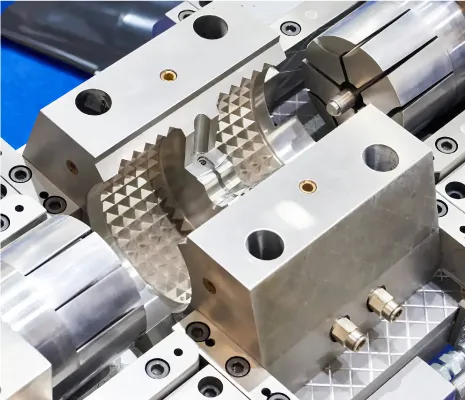
More Than Just a Part—It’s an Integrated Solution
Overmolding is a multi-stage injection molding process where one material (the overmold) is molded onto a second material (the substrate). This creates a strong chemical or mechanical bond between the materials, resulting in a single, robust part that combines the best properties of both—such as the strength of a rigid plastic with the soft-touch feel of an elastomer.
Key Applications Of
Overmolding
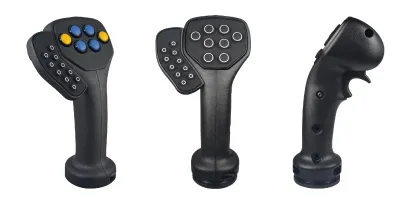
Ergonomic Soft-Touch Grips
Improves handling, comfort, and non-slip control for power tools, medical instruments, and consumer electronics.
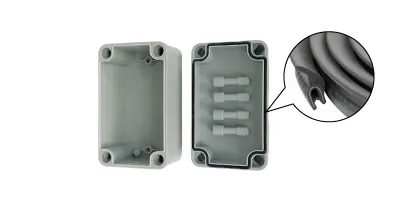
Waterproof & Dust-proof Seals
Creates durable, integrated gaskets and seals for outdoor electronics, automotive sensors, and marine equipment.
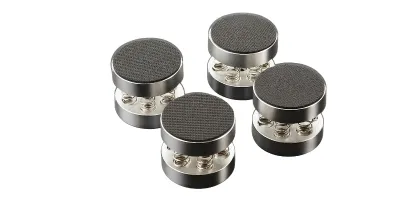
Vibration & Shock Absorption
Adds a protective, impact-absorbing layer to sensitive components, extending product life and improving performance.
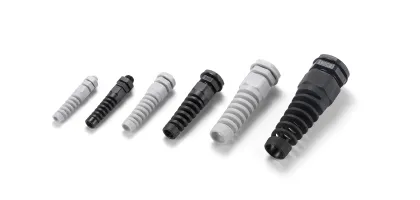
Cable Strain Relief
Increases the durability of cable and connector junctions by preventing damage from bending and pulling forces.
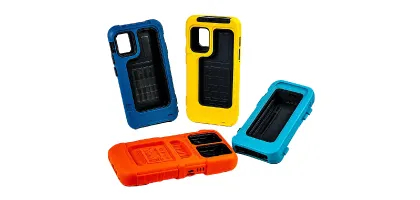
Aesthetic Enhancements
Allows for multi-color designs, branding, and sophisticated finishes without the need for secondary painting or assembly.
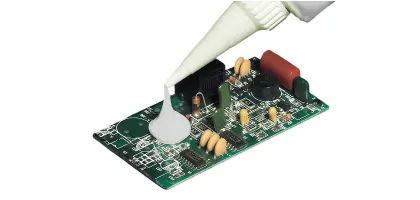
Component Encapsulation
Protects sensitive electronics and circuits from moisture, impact, and vibration, ensuring reliability in harsh environments.
Why Choose RAPMAF
Manufacturing for Overmolding

Material Compatibility Expertise
Our deep knowledge of polymer science ensures we select the optimal substrate and overmold materials for a strong, permanent chemical bond, preventing delamination.
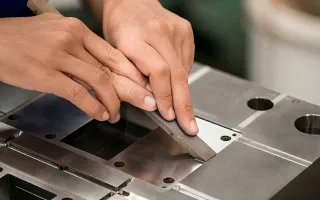
Advanced Mold Design & Simulation
We use Moldflow analysis to predict and optimize resin flow, gate locations, and cooling, ensuring a flawless bond and defect-free parts from the first shot.
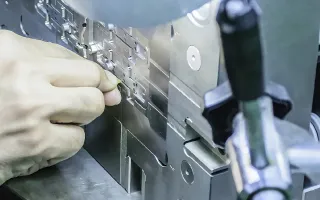
Precision Process Control
We meticulously control all critical parameters—temperature, pressure, and time—for both molding stages to guarantee consistent part quality and bond strength.
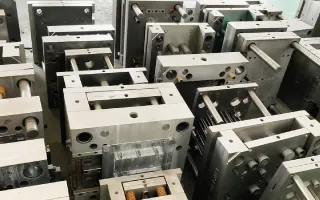
Rigorous Adhesion Testing
We validate bond strength through destructive and non-destructive testing, including peel tests and push-out tests, to ensure your parts meet or exceed specifications.
Technical Specifications & capabilities
We are equipped for both high-volume production and complex prototyping. Review our technical capabilities below.
| Feature | Specification / Description |
|---|---|
Overmolding Processes |
Two-Shot Sequential Molding, Insert Molding, Multi-Shot Molding |
Substrate Materials (Rigid) |
PC, ABS, PC/ABS, PP, Nylon (PA), PBT, Acetal (POM), Metal Inserts (Steel, Brass, AL) |
Overmold Materials (Soft) |
TPE, TPU, LSR (Liquid Silicone Rubber), TPV, PVC |
Bonding Methods |
Chemical Bonding (molecular adhesion)
Mechanical Interlocking (undercuts, holes) |
Part Size Range |
From small electronic components to large handheld device housings |
Typical Tolerances |
Substrate: ±0.05 mm |
Tooling Options |
Prototype Tooling (Aluminum), Production Tooling (Hardened Steel) |
Annual Volume |
From 100 to 1,000,000+ parts |
Standard Lead Time |
Tooling: 4-6 weeks |
Quoting Time |
Within 24-48 hours, including free DFM feedback |

Step 1
Design & Material Consultation – Submit your CAD files. Our engineers consult with you on material selection and design optimization.

Step 2
DFM & Mold Design – We provide a detailed Design for Manufacturability (DFM) report and design the precision overmold tool.

Step 3
Tooling & Molding- We fabricate the mold and produce T1 samples for your approval before starting mass production.

Step 4
Quality Control & Delivery- We perform rigorous quality checks, including bond tests, and ship your finished parts with full documentation.
Our Streamlined
4-Step Process
Material Combinations & Compatibility
Achieving a strong chemical bond is the key to successful overmolding. Below is a general guide to material compatibility. Our engineers will help you select the perfect pair for your application.
| Substrate | TPE/TPV (Thermoplastic Elastomer) | TPU (Thermoplastic Polyurethane) | LSR (Liquid Silicone Rubber) |
|---|---|---|---|
PP (Polypropylene) |
Excellent |
Poor |
Mechanical Lock |
ABS |
Good |
Excellent |
Mechanical Lock |
PC (Polycarbonate) |
Good |
Excellent |
Mechanical Lock |
PC/ABS Alloy |
Good |
Excellent |
Mechanical Lock |
Nylon (PA6, PA66) |
Excellent (Special Grade) |
Good |
Excellent (with Primer) |
PBT |
Good |
Good |
Excellent (with Primer) |
Metal Inserts |
Mechanical Lock |
Mechanical Lock |
Excellent (with Primer) |
Excellent: Strong chemical bond | Good: Good chemical bond | Poor: No chemical bond | Mechanical Lock: Requires mechanical interlock design | Primer: Requires a primer application on the substrate for a chemical bond
Texture & Finishing Options
The final touch defines your product’s feel and look. We offer a wide range of standard and custom textures for the overmolded material to enhance grip, aesthetics, and user experience.
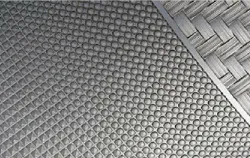
Mold-Tech® Textures
We can apply any standard Mold-Tech or VDI texture to the mold cavity, creating finishes from fine matte to coarse leather grains.
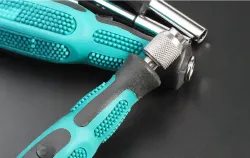
Custom Grip Patterns
We can CNC machine custom patterns like stippling, ribs, or diamonds into the mold for superior grip and a unique brand identity.

High-Gloss Finish
For the substrate, we can achieve SPI-A1/A2 finishes for a premium, high-gloss appearance.

Matte / Satin Finish
A smooth, non-glare finish for the overmolded component, providing a clean, modern look and feel.
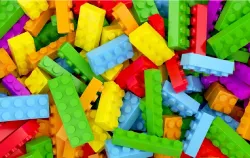
Custom Color Matching
We can match any Pantone or RAL color for both the substrate and overmold materials for perfect brand consistency.
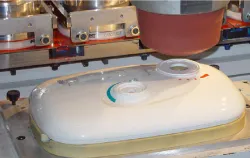
Pad Printing
Apply durable logos, instructions, or graphics onto the finished part in single or multiple colors.
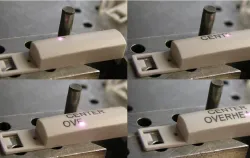
Laser Engraving
Permanently mark your parts with logos, serial numbers, or QR codes with extreme precision.
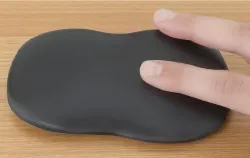
Soft-Touch Coating
For substrates where direct overmolding is not feasible, we can apply a durable soft-touch paint to simulate the feel.
Industries We Serve
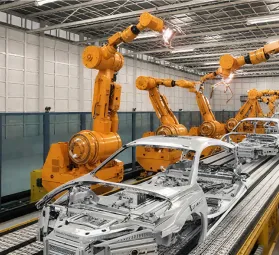
We assemble complex robotic arms,end-effectors, and control boxes,integrating motors,sensors, and wiring

We build diagnostic equipment and lab instruments in a controlled environment,adhering to strict quality and documentation standards.
We provide final assembly for high-end audio equipment, smart home devices,and other consumer products ready for market.
We assemble ruggedized enclosures,mil-spec connectors,and mission-critical hardware with full traceability and documentation.
Showcase of Our Overmolded Parts
We help brands create better products. Explore a selection of parts that demonstrate our expertise in fusing form, function, and feel.
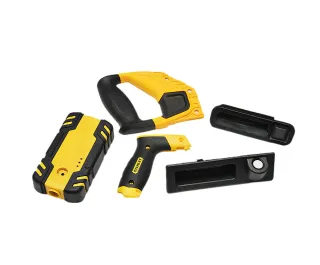
Part Name
Material
Finish
Industry
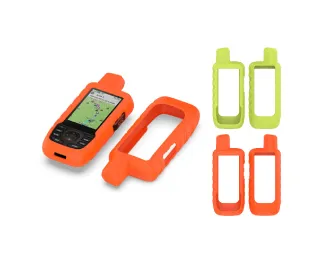
: Power Tool Handle
: ABS + TPE
: Insert Molding
: Power Tools
Part Name
Material
Finish
Industry
Part Name
Material
Finish
Industry
Part Name
Material
Finish
Industry
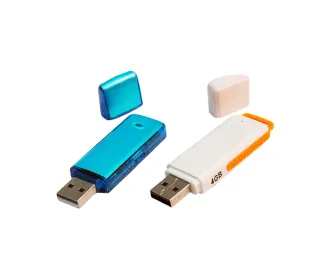
: USB Drive Casing
: PC + TPE
: Two-Shot Molding
: Consumer Electronics
Part Name
Material
Finish
Industry
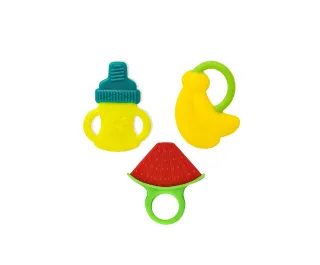
: Infant Teether
: PP + TPE
: Two-Shot Molding
: Infant Care
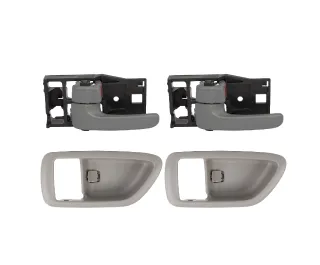
Part Name
Material
Finish
Industry
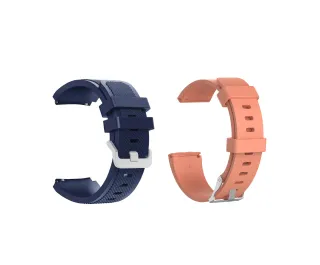
Part Name
Material
Finish
Industry
: Smartwatch Strap
: PC + TPU
: Insert Molding
: Wearables
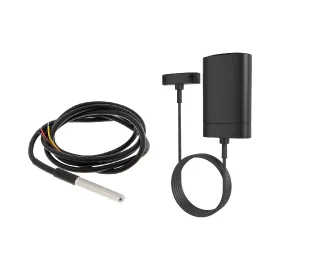
Part Name
Material
Finish
Industry
: Encapsulated Sensor
: PBT + TPE
: Insert Molding
: Industrial Automation

Our Commitment To Bond Strength & Quality
Quality in overmolding means more than just appearance; it’s about the integrity of the bond. Our quality lab is equipped to validate every aspect of your part. We perform systematic peel tests, push-out tests, and thermal cycling to ensure the bond withstands real-world use, and provide full CMM reports for dimensional accuracy.
Related Articles &
Insights

What Is The Young’s modulus In Simple Terms?
When the majority of engineering students listen to “Young’s Modulus” for the very first time, they panic. They visualize a blackboard covered in difficult calculus,
Inquiry & FAQs
Overmolding involves many technical details.
Here are answers to some common questions to guide you through the process.
We guarantee that all the files and pictures you upload will be kept confidential and no customer personal information will be disclosed.
Insert molding involves manually or robotically placing a pre-molded substrate into a mold before the overmold material is injected. Two-shot molding is a more automated process where both steps occur sequentially in a specialized, rotating mold, making it ideal for high volumes.
Material compatibility is the most critical factor for achieving a strong chemical bond. If materials are not chemically compatible, a well-designed mechanical interlock (e.g., undercuts, holes) must be incorporated into the substrate’s design.
Yes, we frequently overmold onto metal inserts like steel, aluminum, and brass. Since there is no chemical bond, a strong mechanical interlock design is essential, and sometimes a primer is used to promote adhesion.
Overmolding tools are generally more complex and thus more expensive than single-material molds. A two-shot mold is significantly more costly than an insert mold, but it offers lower part costs at high volumes due to automation.
For an accurate quote, we need 3D CAD files for all components, material specifications for both the substrate and overmold (including colors), and the expected annual volume. Any notes on required textures or critical areas are also very helpful.
Delamination is the separation of the overmold material from the substrate, indicating a bond failure. We prevent this by ensuring material compatibility, optimizing the design for adhesion, and precisely controlling molding parameters like melt temperature and pressure.
Absolutely. Overmolding is an excellent method for creating integrated, reliable waterproof and dust-proof (IP-rated) seals. The continuous bond eliminates leak paths that can occur with separate, assembled gaskets.
The substrate is the first part that is molded or the insert that is placed into the mold. It is the rigid “skeleton” of the final component onto which the softer overmold material is applied.
TPE (Thermoplastic Elastomer) is a class of polymers that behave like rubber but can be processed like plastic. It’s popular because it bonds well with many rigid plastics (like PP and ABS) and offers a wide range of hardness, colors, and a pleasant soft-touch feel.
A Design for Manufacturability (DFM) analysis is a review of your part design to ensure it can be molded efficiently and reliably. For overmolding, it’s crucial for identifying potential issues with material flow, bond strength, and shut-off areas (where the two materials meet).
We ensure perfect texture by meticulously preparing the mold surface. The texture is etched or machined into the steel mold, and we use optimized process parameters to ensure the plastic perfectly replicates every fine detail of the mold’s surface.
Yes, we generally recommend a minimum thickness of 0.8mm to 1.0mm for the overmold layer. Thinner walls can lead to incomplete filling (“short shots”) and a weak bond, though this depends heavily on the material and part geometry.
Yes, we can overmold clear materials like PC or acrylic. A common application is overmolding a soft TPE gasket onto a clear PC lens or window to create a single, sealed component.
Our typical lead time for T1 samples is 4 to 6 weeks from the final approval of the mold design. This includes the time for mold fabrication and the initial molding trial. Expedited options are available.
Ready to Start Your Project?
Get a free quote and design for manufacturability analysis,






