


“Who’s the biggest tool manufacturer?”
It’s a question that sounds simple, but the answer is one of the most misunderstood topics in the entire manufacturing and construction world. If you walk into any big-box hardware store, you’re greeted by a sea of different colors—yellow, red, blue, teal—each representing a brand with a fiercely loyal following.
But here’s the secret that we in the professional trades know: many of those rival brands are actually owned by the same company.
I’m Clive, Lead Engineer at RM (Rapid Manufacturing). For over two decades, I’ve been responsible for outfitting our shops with tools that can survive the brutal demands of daily production. I’ve tested, broken, and warrantied more tools than I can count. And a huge part of my job is understanding the market—not just which tool is best, but who actually makes it and what their long-term strategy is.
The question isn’t “which brand is biggest?” but “which parent company is the most powerful?” Today, I’m pulling back the curtain to show you the corporate giants that own the brands you trust.
Why You Can Trust This Guide: A 20-Year Perspective
At RM, our uptime and precision depend directly on the reliability of our tools. A failed impact driver on the assembly line or an inaccurate drill press can cost us thousands in delays and rework. We don’t choose our tools based on marketing hype or brand loyalty; we choose them based on performance data, long-term cost of ownership, and the strength of the company that stands behind the tool. This guide is built on:
- Hands-On Experience: We use tools from all the major players every single day. We know their strengths, their weaknesses, and their real-world breaking points.
- Industry Analysis: We track the financial reports, acquisitions, and technology roadmaps of the major tool conglomerates to make informed purchasing decisions for our own multi-million dollar tool budgets.
- A Focus on the “Why”: I won’t just tell you who owns whom. I’ll explain why it matters—how a parent company’s strategy for battery platforms, R&D spending, and market focus directly impacts the quality and future of the tools you buy.
Defining “Biggest”: The Three Key Metrics
Before we name names, we need to agree on how we measure “biggest.” There are three primary ways to look at it:
- Total Revenue: This is the simplest metric. Which publicly traded company reports the highest sales figures for its tool division? This shows pure financial muscle and market size.
- Brand Portfolio: Which company owns the most well-known and diverse range of tool brands? This demonstrates market penetration and their ability to serve everyone from the DIY homeowner to the aerospace engineer.
- Market Share in Key Segments: Which company dominates specific, high-value markets like professional cordless power tools or industrial fastening systems? This shows influence and technological leadership.
For the purpose of this guide, we’ll consider all three, but we’ll lead with the undisputed king of revenue.
The Reigning Champion: Stanley Black & Decker (NYSE: SWK)
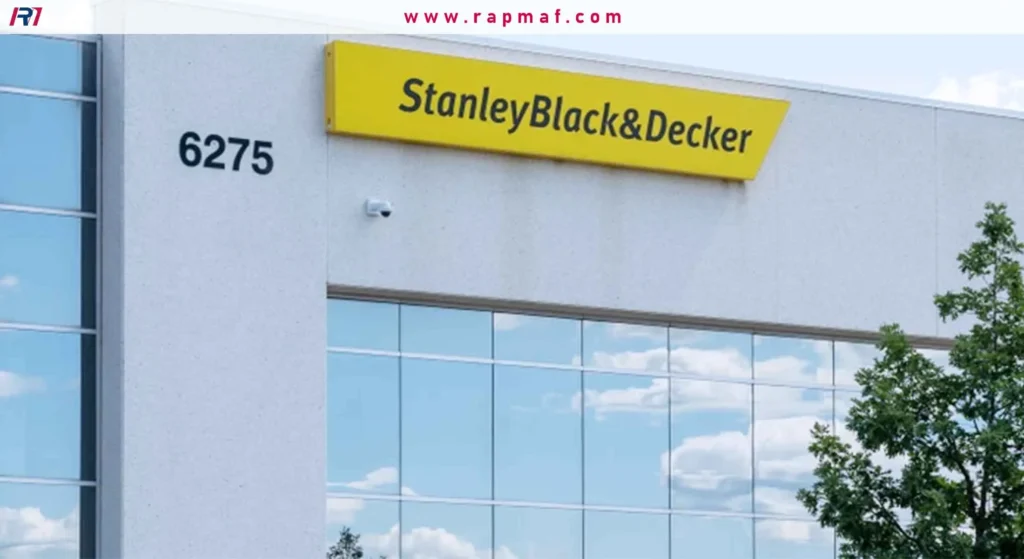
If you’re looking for the single biggest tool manufacturer on the planet by revenue, the answer is clear: Stanley Black & Decker (SBD).
This American-based powerhouse is a true titan of the industry. They are a Fortune 500 company with a history stretching back to 1843. Their scale is almost difficult to comprehend. For decades, they have grown not just by inventing new tools, but by strategically acquiring other legendary tool companies.
When you buy a tool from one of their brands, you’re buying into a massive ecosystem of manufacturing, R&D, and global distribution.
The SBD Empire: A Look at the Brands
Many professionals are shocked to learn how many distinct, and often competing, brands fall under the SBD umbrella.
| Brand | Primary Market / Identity | Clive’s Engineering Insight |
|---|---|---|
| DEWALT | Professional Contractors, Construction Trades (Their flagship pro brand) | The yellow-and-black tools are the backbone of countless construction sites. DeWalt’s FlexVolt battery system, which can switch between 20V and 60V, was a game-changer for high-power cordless tools. They are the direct competitor to Milwaukee in the pro space. |
| Craftsman | DIY, Homeowners, Mechanics (The iconic American garage brand) | Once owned by Sears, Craftsman was acquired by SBD in 2017. SBD has since massively expanded the line, leveraging its manufacturing power. While some purists miss the old Sears days, the brand is more accessible now than ever. |
| Stanley | Hand Tools, Mechanics Tools, Storage (The foundational brand) | The classic yellow-and-black Stanley tape measure is a symbol of the entire industry. Their hand tools are a global standard, and their FatMax line represents their professional-grade offering. |
| Black+Decker | Consumer/Homeowner Power Tools & Appliances | This is SBD’s entry-level brand, focused on affordability and accessibility for the casual DIYer. While not intended for professional job sites, they sell in enormous volumes. |
| Porter-Cable | Woodworking, Finish Carpentry | A respected name in woodworking, known for routers, sanders, and nailers. In recent years, it feels like SBD has focused more R&D on DeWalt, but Porter-Cable still holds a loyal following. |
| Mac Tools | Professional Automotive Mechanics (Sold from tool trucks) | This is SBD’s direct competitor to Snap-on and Matco. They sell premium mechanics tools directly to professionals in their shops, a completely different business model than retail. |
| Bostitch | Fastening Tools (Nailers, Staplers) | A dominant name in pneumatic and cordless fastening. If you’ve worked in framing or roofing, you’ve used a Bostitch nailer. |
| Irwin | Hand Tool Accessories & Vises (Vise-Grip, Marathon Blades) | SBD acquired Irwin to bolster its hand tool and accessory portfolio. The Vise-Grip locking plier is an iconic tool, invented by Irwin, that now sits in the SBD family. |
| Lenox | Saw Blades & Cutting Accessories | Another strategic acquisition to dominate the “consumables” market. Lenox blades for reciprocating saws and band saws are some of the best in the business. |
The SBD Strategy: Dominate Every Shelf
Stanley Black & Decker’s strategy is clear: have a product at every price point for every possible customer.
- Want a cheap drill for hanging one picture? Black+Decker.
- Building a deck on the weekend? Craftsman.
- Framing a house for a living? DEWALT.
- A professional mechanic needing a lifetime warranty tool? Mac Tools.
This multi-brand approach allows them to control a massive amount of retail shelf space and cater to different customer loyalties, even when the profits all flow back to the same parent company in Connecticut. They are the General Motors or Procter & Gamble of the tool world.
The Challenger: Techtronic Industries (TTI) (HKG: 0669)
While Stanley Black & Decker is the king of revenue and brand diversity, the company that has truly driven innovation and competition in the last decade is Techtronic Industries (TTI).
Based in Hong Kong, TTI is a powerhouse with a completely different strategy than SBD. Where SBD’s approach is to own a brand for every possible customer segment, TTI has a laser-like focus on two core markets: the professional trades and the serious DIYer. Their entire business model is built on creating powerful, desirable cordless ecosystems that lock customers in for life.
If SBD is the sprawling empire, TTI is the elite, disciplined army. Their growth has been nothing short of explosive, driven almost entirely by the phenomenal success of their flagship brand.
The TTI Powerhouse: A Look at the Brands
TTI’s portfolio is smaller and more focused than SBD’s, which is a key part of their strength.
| Brand | Primary Market / Identity | Clive’s Engineering Insight |
|---|---|---|
| Milwaukee | Professional Trades (Electricians, Plumbers, Automotive, MRO) | This is TTI’s crown jewel and the engine of its growth. Milwaukee’s relentless focus on trade-specific solutions (like their M18 press tools for plumbers or their high-torque impact wrenches for mechanics) has won them a fanatically loyal following. Their investment in battery technology (M12, M18, MX Fuel) and digital tool management (ONE-KEY™) is second to none. They are the definition of a disruptive brand. |
| Ryobi | DIY, Homeowners, Hobbyists | If Milwaukee is for the pros, Ryobi is TTI’s weapon for conquering the garage. Sold primarily through Home Depot, Ryobi’s key advantage is the massive ONE+ 18V battery platform, which features over 260 tools, all compatible with the same battery since 1996. This backward compatibility is a huge selling point for homeowners who don’t want to constantly buy new batteries. |
| Ridgid (Licensed) | Professional Trades, Plumbing (Sold exclusively at Home Depot) | Here’s where it gets interesting. The iconic Ridgid brand (known for its legendary pipe wrenches) is owned by Emerson Electric. However, TTI manufactures the 18V cordless power tools you see under the Ridgid name. This licensing deal gives TTI another avenue to reach professional customers through Home Depot’s massive retail footprint. |
| AEG | Professional Trades (Primarily in Europe, Australia, New Zealand) | In many parts of the world, the tools you see in the orange of AEG are the equivalent of Ridgid in North America. It is TTI’s professional tool brand positioned to compete alongside Milwaukee in different global markets. |
| Hoover, Dirt Devil, Oreck | Floorcare | Don’t forget that TTI is, at its core, a battery and electric motor company. They leverage this expertise across multiple industries, and their floorcare division is a major part of their business, competing with brands like Dyson and Shark. |
The TTI Strategy: A Two-Pronged Attack
TTI’s strategy is brilliant in its simplicity:
- Win the Professional with Milwaukee: They focus relentlessly on creating innovative, high-performance solutions for the most demanding trades. They go to job sites, ask electricians and plumbers what their biggest frustrations are, and then build a tool to solve that specific problem.
- Win the Homeowner with Ryobi: They offer an unbeatable value proposition with a massive, ever-expanding, and backward-compatible battery system. They make it easy and affordable for a DIYer to get into their ecosystem and stay there.
This strategy has allowed them to directly challenge Stanley Black & Decker’s dominance, creating the fierce “Red vs. Yellow” (Milwaukee vs. DeWalt) rivalry that defines the modern professional tool market.
Real-World Case Study: How RM Chose Its Cordless Ecosystem
A few years ago, our facility faced a major decision. Our assembly lines and maintenance departments were a tangled mess of extension cords and pneumatic lines. It was inefficient, created trip hazards, and limited our flexibility. We made the call to invest over $100,000 to standardize on a single cordless platform.
The choice came down to the two titans: DeWalt (SBD) vs. Milwaukee (TTI).
This wasn’t about picking a color. It was a serious engineering and financial decision. We developed a 4-point evaluation checklist to make the right call for our specific industrial needs.
Our 4-Point Evaluation Checklist:
- Breadth of the Professional Platform: Our needs are diverse. The assembly team needs light, ergonomic impact drivers. The maintenance team needs heavy-duty tools like portable band saws, grease guns, and pipe threaders. We laid out every tool we needed and checked which platform offered a cordless version.
- Finding: Both platforms had the basics covered. However, Milwaukee’s M18 line had a distinct advantage in specialized MRO (Maintenance, Repair, and Operations) tools. They offered niche products that would allow us to replace very specific corded or pneumatic tools, getting us closer to a 100% cordless floor.
- Battery Technology & Forward Vision: A six-figure investment is a long-term commitment. We needed to bet on the company we believed would lead in battery innovation for the next decade.
- Finding: DeWalt’s FlexVolt system was impressive, offering high power for tools like miter saws. However, Milwaukee’s strategy of having two distinct, best-in-class systems (the compact M12 and the powerful M18) felt more versatile for our mix of tight-space assembly and heavy-duty maintenance. Furthermore, Milwaukee’s investment in their digital ONE-KEY™ platform, which allows us to track tool inventory and performance, was a huge plus for an industrial environment.
- Durability (The “Drop Test”): We gave fully-charged kits from both brands to our most demanding technicians and told them to use them like they owned them for one month. No holding back.
- Finding: Both brands build incredibly tough tools. The DeWalt tools survived multiple drops from ladders and were covered in grime but kept running. The Milwaukee tools endured the same abuse. In terms of pure durability for general use, it was a dead heat. Both are built for the battlefield of a job site.
- Ergonomics & User Feedback: At the end of the 30-day trial, we surveyed the teams. Which tool felt better in their hand after an 8-hour shift? Which one caused less fatigue?
- Finding: This was subjective, but a slight preference emerged for the Milwaukee tools’ grip and balance, especially on the M12 drivers used for all-day assembly.
The Final Decision
After weighing all the factors, we chose to standardize the RM facility on the Milwaukee platform.
The deciding factor was Point #1: The Breadth of the Platform. Milwaukee’s deep catalog of trade-specific tools meant we could get a cordless solution for nearly every job in our facility, from the assembly line to the plumbing in the walls, all on one or two battery types. This simplified our purchasing, inventory, and training, leading to a lower total cost of ownership.
This doesn’t mean DeWalt is a bad choice. For a residential construction crew, their FlexVolt system and dominance in tools like miter saws might make them the better option. But for our specific needs as a diverse manufacturing operation, TTI’s Milwaukee ecosystem was the perfect fit.
The European Titan: Robert Bosch GmbH (Bosch)
No discussion of global tool manufacturing is complete without showing immense respect for the German engineering powerhouse, Bosch.
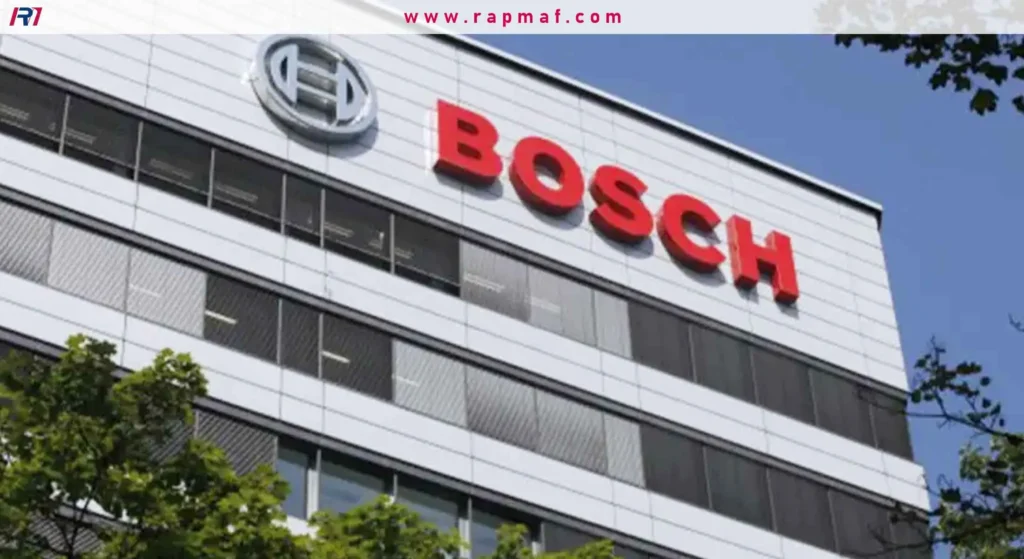
Unlike the publicly traded SBD and TTI, Bosch is a private conglomerate, with the vast majority of its shares held by a charitable foundation. This fundamentally changes their business philosophy. They are not beholden to quarterly earnings reports, which allows them to invest heavily in long-term research and development. While you know them for tools, their business spans automotive parts, home appliances, and industrial technology. This cross-industry expertise often fuels the innovation in their tool division.
The Bosch Portfolio: Precision and Power
Bosch also employs a multi-brand strategy, though it’s simpler than SBD’s.
| Brand | Primary Market / Identity | Clive’s Engineering Insight |
|---|---|---|
| Bosch Professional (Bosch Blue) | Professional Trades, Concrete, Metalworking | Bosch Blue tools are legendary for their durability and precision. Their Bulldog rotary hammers are the industry standard for concrete work, and their expertise in electronics and measurement shines in their laser levels and distance measurers. They compete directly with DeWalt and Milwaukee. |
| Bosch DIY (Bosch Green) | DIY / Homeowner (Primarily in Europe) | Similar to SBD’s Black+Decker, this line is aimed at the consumer market with a focus on ease of use and affordability. It’s less common in North American big-box stores. |
| Dremel | Rotary Tools, Hobbyists, Detail Work | Dremel isn’t just a brand; it’s a household name that has become synonymous with the tool itself. Bosch acquired Dremel and has continued to innovate, making it the undisputed king of the craft and hobbyist market. |
| Diablo / Freud | Premium Saw Blades & Router Bits | This was a brilliant acquisition. Diablo and Freud make some of the best cutting accessories on the planet, especially for woodworking. Owning them gives Bosch a massive share of the high-margin “consumables” market, just as owning Lenox does for SBD. |
The Bosch Strategy: Engineering First
Bosch’s strategy is to win on engineering excellence. They may not always be the first to market with a new category of tool, but when they do release a product, it is typically exceptionally well-designed and built to last. Their focus on high-performance motors, advanced electronics, and robust construction appeals to professionals who value longevity and precision above all else.
The Independent Innovator: Makita (TYO: 6586)
The final major player is the fiercely independent Japanese powerhouse, Makita.
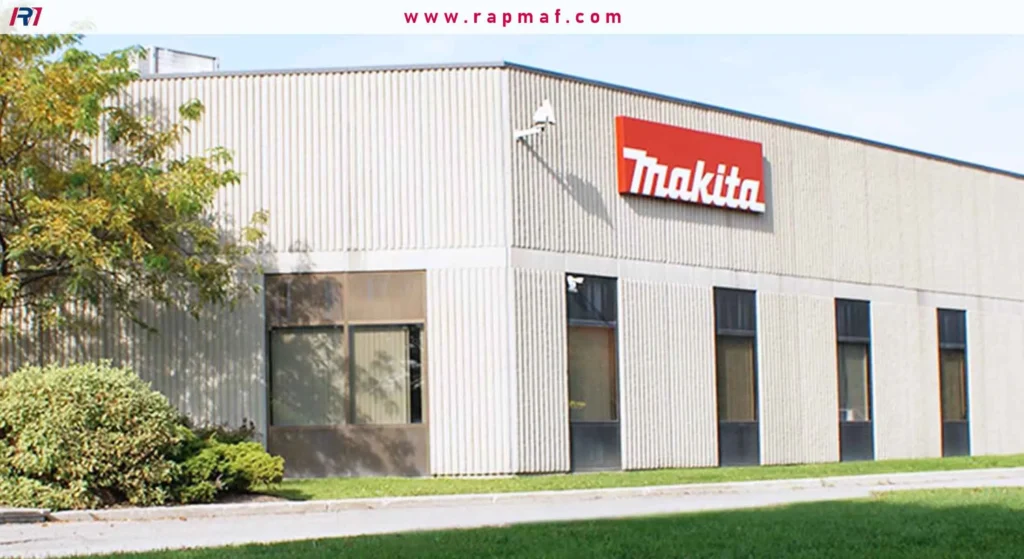
Makita is a different breed. They don’t have a complex web of sub-brands. They are not owned by a massive conglomerate. Makita is Makita. Their focus is singular: build high-quality, reliable tools for professionals under one name, one color. They have a long history of innovation, including being credited with creating the first-ever cordless drill in 1978.
The Makita Strategy: One Platform to Rule Them All
Makita’s core strategy revolves around their massive LXT 18V battery platform. They were one of the first to commit fully to an 18V lithium-ion system, and they have relentlessly expanded it to include hundreds of tools, from drills and saws to lawnmowers, coffee makers, and job site fans.
Their strengths are:
- Motor Technology: Makita is renowned for the quality and efficiency of its brushless motors. They are smooth, powerful, and incredibly durable.
- Ergonomics: Users consistently praise Makita tools for their excellent balance and comfortable grip, which reduces fatigue over a long day.
- Reliability: The “Teal Army” is fiercely loyal for a reason. Makita tools have a well-earned reputation for lasting for years in demanding environments.
Their approach is one of quiet, consistent excellence rather than flashy marketing. They are the trusted choice for legions of professionals in carpentry, woodworking, and general construction who value performance and a unified battery system above all else.
Conclusion: So, Who Is Actually the Biggest?
As we established at the beginning, “biggest” can be defined in several ways. Let’s declare the winner for each metric:
- The Revenue King: Stanley Black & Decker. By pure financial muscle and the sheer volume of tools sold across their vast brand portfolio, they are the undisputed number one.
- The Growth & Innovation Leader: TTI. No company has grown faster or been more aggressive in pushing the boundaries of cordless technology in the last 15 years. Their Milwaukee brand has completely reshaped the professional market.
- The Engineering Giant: Bosch. As a diversified technology company, Bosch has R&D resources that are almost unmatched, leading to incredibly well-engineered and durable tools.
- The Independent Specialist: Makita. Their laser-like focus on a single, high-quality professional platform has earned them a global reputation for reliability and performance.
My Final Advice as an Engineer: The question you should ask isn’t “Who is the biggest?” but “Which company’s ecosystem is the best fit for my specific needs?”
As our case study showed, we chose Milwaukee for its incredibly broad range of specialized MRO tools. For a residential framer, DeWalt’s high-power FlexVolt saws might be the deciding factor. For a cabinet maker, the precision of Bosch or the ergonomics of Makita might win the day.
Understand the parent companies. Understand their strategies. But make your final decision based on the tools that will make you the most efficient, productive, and profitable.
At RM (Rapid Manufacturing), we apply this same rigorous, performance-based decision-making to every part we create. When you need a manufacturing partner who understands that quality is not just a brand name but a result of engineering excellence, reach out to our team.
Frequently Asked Questions (FAQ)
- Q: Who is Milwaukee Tool’s biggest competitor?
- A: Milwaukee’s biggest and most direct competitor is DeWalt. This “Red vs. Yellow” rivalry is the defining competition in the professional power tool market today. Both brands are aimed at the same professional contractors and tradespeople.
- Q: What company owns Milwaukee Tools?
- A: Milwaukee Tool is owned by the Hong Kong-based conglomerate Techtronic Industries (TTI). TTI also owns other major brands like Ryobi and Ridgid (licensed).
- Q: Who owns DeWalt tools?
- A: DeWalt is the flagship professional brand of the American company Stanley Black & Decker (SBD). SBD owns a huge portfolio of other brands, including Craftsman, Mac Tools, and Black+Decker.
- Q: Is Milwaukee owned by DeWalt?
- A: Absolutely not. This is a common misconception. They are arch-rivals owned by two completely different and competing parent companies, TTI and SBD, respectively.
- Q: Are Ryobi and DeWalt the same company?
- A: No. Ryobi is owned by TTI (the same company as Milwaukee), and DeWalt is owned by SBD. They are direct competitors, but typically in different market segments. Ryobi is primarily aimed at the DIY/homeowner market, while DeWalt is aimed at professionals.
References
- Stanley Black & Decker. (2024). Our Brands.
- Techtronic Industries (TTI). (2024). TTI Brands.
- Robert Bosch GmbH. (2024). Bosch Global – Our Brands.
- Makita Corporation. (2024). Global Network.
Disclaimer
The information on this page is for informational purposes only. RM makes no representations or warranties, express or implied, as to the accuracy or completeness of this information. For any third-party services procured through the RM network, it is the buyer’s responsibility to specify and confirm performance parameters, tolerances, materials, and workmanship during the quotation process. For more detailed information, please do not hesitate to contact us.
RM: Your Precision Manufacturing Partner
RM is an industry leader in custom manufacturing solutions. With over 20 years of profound experience, we have become the trusted partner for more than 5,000 clients worldwide. We specialize in a comprehensive range of manufacturing services—including high-precision CNC machining, sheet metal fabrication, 3D printing, injection molding, and metal stamping—to provide you with a true one-stop-shop experience.
Our world-class facility is equipped with over 100 state-of-the-art 5-axis machining centers and operates in strict compliance with the ISO 9001:2015 quality management system. We are dedicated to providing solutions that blend speed, efficiency, and exceptional quality to customers in over 150 countries. From rapid prototyping to large-scale production, we promise delivery in as fast as 24 hours, helping you gain a competitive edge in the market. Choosing RM means selecting an efficient, reliable, and professional manufacturing ally.
Explore our capabilities today by visiting our website: www.rapmaf.com







9 Responses