



You’ve seen it in your own kitchen. That black or gray non-stick pan, a faithful culinary workhorse, now has a few silvery scratches on its surface. A thought flashes through your mind, fueled by decades of headlines and internet warnings: “Is this dangerous? Is this going to give me cancer?”
This is one of the most persistent questions in modern material science, and the confusion surrounding it is immense. The good news is, the answer is much clearer today than it was 15 years ago.
At RM (Rapid Manufacturing), we work with the world’s most advanced materials every day, from aerospace-grade aluminum to medical-grade polymers. We stake our reputation on understanding the precise science behind these materials, including the family of polymers that includes Teflon coatings. This guide will provide you with the engineering-level clarity you need to cook with confidence.
The Short Answer: Yes, Modern Teflon™ Pans Are Safe (But You Need to Know Why)
For those looking for the quick takeaway: Yes, cookware coated with Teflon™ (and other modern non-stick coatings) is generally considered safe for everyday home use.
The key word here is modern. The real story isn’t about the non-stick coating itself, but about a chemical that used to be involved in its manufacturing process. To truly understand the safety of your cookware, you need to understand the crucial difference between two four-letter acronyms: PTFE and PFOA.
Getting this distinction right is the key to dispelling the fear and making informed decisions.
The Two Key Players: PTFE vs. PFOA
The entire controversy and confusion around non-stick cookware boils down to mistaking one chemical for the other. Let’s define them clearly.
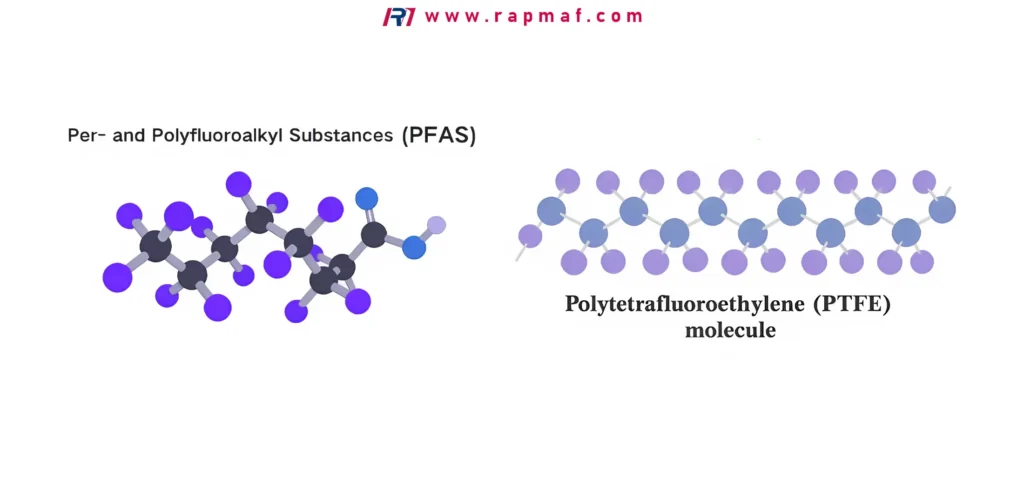
PTFE (Polytetrafluoroethylene): The Non-Stick Coating Itself
- What It Is: PTFE is a synthetic fluoropolymer—a type of plastic. It was discovered by accident at DuPont in 1938 and is commercially known by the brand name Teflon™, though many companies now produce their own versions.
- Its Properties: PTFE is a remarkable material. It has one of the lowest coefficients of friction of any known solid, which is why things don’t stick to it. It’s also extremely non-reactive (chemically inert) and can withstand high temperatures.
- Is It Dangerous? On its own, in solid form, PTFE is incredibly stable and non-toxic. It is so inert that it’s frequently used in the medical field for implants. If you were to ingest a flake of PTFE from a scratched pan, it would pass through your digestive system completely unchanged, like a tiny piece of plastic. The solid coating on your pan is not the source of the historical health concerns.
PFOA (Perfluorooctanoic Acid): The Old Manufacturing Aid
- What It Is: PFOA is part of a larger group of chemicals called PFAS (per- and polyfluoroalkyl substances), often referred to as “forever chemicals” because they don’t break down easily in the environment.
- Its Role in Cookware: For decades, PFOA was used as a surfactant—think of it as a processing aid or a type of industrial soap—in the manufacturing of PTFE. It helped create a smooth, stable emulsion to apply the PTFE coating to the pan. Crucially, almost all of the PFOA was burned off during the high-temperature manufacturing process. However, trace amounts could remain, and the manufacturing process itself released PFOA into the environment.
- Is It Dangerous? Yes. PFOA is the villain of this story. Extensive studies have linked long-term PFOA exposure to a host of health problems, including kidney and testicular cancer, thyroid disease, high cholesterol, and ulcerative colitis.
The Analogy: Think of building a complex brick archway. You might use a wooden scaffolding structure to hold the bricks in place while the mortar sets.
- The PTFE is the strong, stable, and permanent brick archway.
- The PFOA was the temporary wooden scaffolding used to build it.
The problem was never the final archway (PTFE), but the potential for some of the scaffolding (PFOA) to be left behind or to have polluted the area during construction.
The Great Phase-Out: Why Your New Pan is Different
Recognizing the health and environmental risks of PFOA, the global industrial and regulatory landscape changed dramatically.
- EPA Stewardship Program: In 2006, the U.S. Environmental Protection Agency (EPA) launched a voluntary program with eight major companies, including DuPont, to eliminate the use of PFOA and related chemicals.
- The 2013 Deadline: The industry successfully met its goal. Since 2013, virtually all non-stick cookware manufactured and sold in the United States and many other parts of the world has been made without the use of PFOA.
- Global Bans: PFOA is now listed under the Stockholm Convention, a global treaty to eliminate or restrict the production and use of persistent organic pollutants.
Manufacturers now use different, newer-generation processing aids (like GenX chemicals, which have their own set of scrutiny) or different manufacturing techniques altogether to apply the PTFE coating.
This means if you purchased your non-stick pan after 2013, you can be highly confident that it is PFOA-free. This single fact resolves the biggest historical health concern associated with Teflon pans.
The Real Safety Rule for Modern Pans: Don’t Overheat Them
Now that we’ve established your modern, PFOA-free pan is safe from a chemical standpoint, let’s talk about the real user manual. The primary safety rule for any PTFE-coated cookware is about temperature control.
While PTFE is incredibly stable, like any polymer, it has its limits. When subjected to extreme heat, it will begin to degrade.
- The Temperature Threshold: Significant decomposition of PTFE begins to occur at temperatures above 500°F (260°C). It becomes much more rapid above 660°F (350°C).
- What Happens: When it overheats, the PTFE coating can release microscopic polymer particulates and gases. Inhaling these fumes can lead to a temporary, flu-like condition known as polymer fume fever, or colloquially, “Teflon flu.”
- Symptoms of Polymer Fume Fever: Sufferers experience symptoms like chills, fever, headache, body aches, and chest tightness. These symptoms typically appear 4-10 hours after exposure and resolve on their own within 12-48 hours without lasting effects. It’s important to note that this is an acute, temporary condition, not a chronic illness or a cancer risk. Documented cases are rare and almost always linked to extreme occupational exposure or severe overheating of cookware in unventilated spaces.
How Hot is 500°F in a Real Kitchen?
It’s hotter than you think, but it’s also very achievable if you’re not careful.
- Water Boils: 212°F (100°C)
- Oils Smoke (most common cooking oils): 350-450°F (177-232°C)
- Searing a Steak: 450-550°F (232-288°C)
- An Empty Pan on High Heat: Can exceed 500°F in as little as 2-5 minutes.
This gives us a clear set of practical rules for using your non-stick pans safely:
- Never Preheat an Empty Pan: This is the easiest and most common way to accidentally overheat your cookware. Always have something in the pan—oil, butter, water, or food—before you turn on the heat.
- Cook on Low to Medium Heat: Non-stick pans are designed for cooking eggs, pancakes, delicate fish, and sauces—not for high-heat searing. Use cast iron or stainless steel for that.
- Don’t Use It in the Broiler: The direct, intense heat of a broiler will quickly exceed safe temperature limits. Check your manufacturer’s instructions for oven use; many are safe up to 350-400°F, but never for broiling.
- Ensure Good Ventilation: Always use your exhaust fan when cooking, especially if you accidentally overheat a pan. This helps clear any potential fumes quickly.
A Critical Warning for Bird Owners
Pet birds have exceptionally sensitive respiratory systems. The same fumes that might cause temporary discomfort in a human can be lethal to a bird. For this reason, it is strongly advised that bird owners do not use PTFE-coated cookware in their homes.
The Myth of the Scratched Pan: To Toss or Not to Toss?
This is the question that started it all. You see a scratch. Is the pan now a ticking time bomb?
The Verdict: A scratch on a modern, PFOA-free pan does not pose a health risk.
Let’s break down why this persistent myth is scientifically unfounded for any pan made after 2013:
- No PFOA to Release: Since the pan was made without PFOA, there is no PFOA to be released from a scratch. This is the most important point.
- PTFE Flakes are Inert: If a tiny flake of the PTFE coating does chip off and get into your food, it is harmless. As we discussed, PTFE is chemically inert and non-toxic. It will pass through your digestive system completely unchanged and unabsorbed. The American Cancer Society and other health bodies have confirmed that ingesting small particles of non-stick coating is not a cause for concern.
So, why do people still recommend throwing out scratched pans? The reason is performance, not safety.
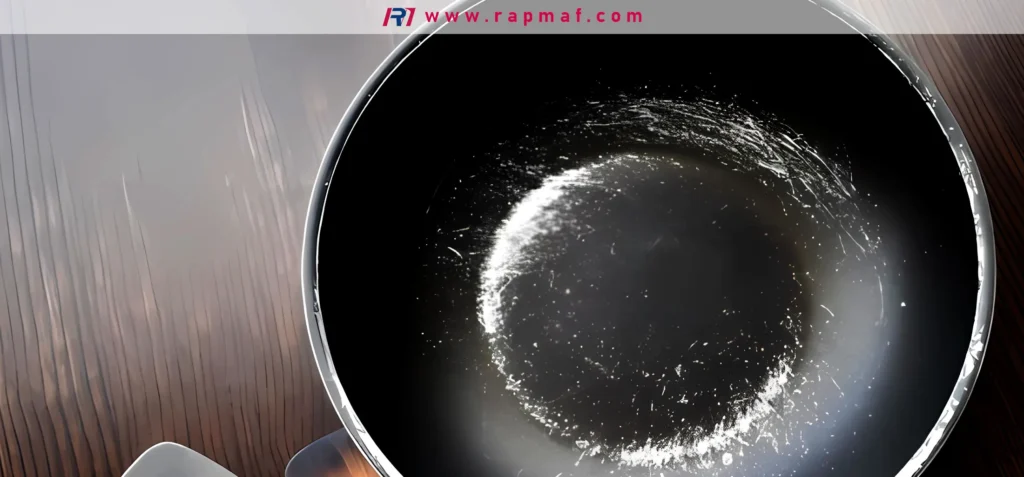
A non-stick pan has one job: to be non-stick. When the surface is scratched, its integrity is compromised. Food will begin to stick in the scratched areas, making the pan difficult to cook with and clean. The pan has simply reached the end of its useful life.
Think of it like a crack in your phone screen. The phone might still work, but it’s annoying to use. It’s not “leaking radiation,” but its primary function is impaired. You replace it for usability, not because it’s suddenly become dangerous.
Case Study: Why We Trust PTFE at RM (Rapid Manufacturing)
The same properties that make PTFE a safe and effective coating for your cookware also make it an indispensable material in high-stakes industrial applications. Our trust in PTFE isn’t based on marketing; it’s based on its proven performance in environments far more demanding than any kitchen.
The Engineering Challenge: A client in the medical device industry needed us to manufacture a series of complex valve components for a fluid analysis machine. The machine would be processing a variety of aggressive biological reagents and cleaning agents. The valve needed to operate smoothly with thousands of cycles, be easy to sterilize, and ensure absolutely no contamination or reaction with the fluids being tested.
Why Other Materials Failed:
- Metals (like Stainless Steel): Could potentially corrode over time when exposed to certain reagents, leaching metallic ions and contaminating the samples.
- Other Plastics (like Polypropylene): Lacked the extreme chemical resistance and the ultra-low friction needed for the valve’s precise, repetitive movements without lubrication.
The RM Solution: Precision-Machined Virgin PTFE
We chose to machine the critical components from a solid block of medical-grade, virgin PTFE.
- Unmatched Chemical Inertness: PTFE is non-reactive to nearly all chemicals, ensuring the purity of the sensitive biological samples. This is the same property that prevents it from reacting with your food or your digestive system.
- Ultra-Low Coefficient of Friction: The valve could operate smoothly and precisely for its entire lifespan without any external lubricants, which would have been a source of contamination. This is the “non-stick” property in action.
- Temperature Stability: The parts could easily withstand the temperatures of steam sterilization cycles without degrading or changing shape.
Our deep understanding of PTFE’s properties allowed us to provide a robust, reliable, and safe solution for a critical medical application. We know it’s safe because we rely on its incredible chemical stability to deliver parts where failure is not an option.
What Are the Safest Cookware Alternatives?
While modern non-stick pans are safe when used correctly, you might be looking for alternatives for high-heat cooking or simply want to diversify your kitchen toolkit. Each material comes with its own set of pros and cons. As a manufacturing company, we understand materials deeply, so here’s our expert breakdown:
1. Cast Iron
A timeless classic for a reason. Cast iron pans are virtually indestructible and, when properly “seasoned” (a process of baking oil onto the surface), develop an excellent, naturally non-stick finish.
- Pros: Incredible heat retention (perfect for searing), extremely durable, oven-safe at any temperature, becomes more non-stick over time.
- Cons: Very heavy, requires regular maintenance (seasoning) to prevent rust and maintain its non-stick properties, reactive with acidic foods (like tomato sauce), which can strip the seasoning and impart a metallic taste.
- Best For: Searing steaks, frying chicken, cornbread, anything you want a deep, even crust on.
2. Stainless Steel
The workhorse of professional kitchens. Stainless steel is a non-reactive alloy (typically steel, chromium, and nickel) that is durable, safe, and versatile. It is not inherently non-stick, but proper heating and oiling techniques can prevent most sticking.
- Pros: Excellent heat control, non-reactive with any food, durable, dishwasher-safe, can handle extremely high temperatures for searing and can go in the broiler.
- Cons: Food can stick without proper technique, can be difficult to clean if food does burn on, can develop hot spots if it doesn’t have a high-quality aluminum or copper core.
- Best For: Sautéing, pan sauces, searing, boiling—truly an all-purpose pan.
3. Carbon Steel
Often described as a hybrid between cast iron and stainless steel. It’s lighter than cast iron but requires seasoning to develop a non-stick surface. It’s a favorite in restaurant kitchens for its responsiveness and durability.
- Pros: Heats up much faster than cast iron, lighter and easier to handle, very durable, can handle high heat.
- Cons: Requires seasoning and maintenance like cast iron, is reactive with acidic foods, prone to rust if not cared for properly.
- Best For: Woks, crepes, omelets, and high-heat searing where quick temperature changes are needed.
4. “Ceramic” Non-Stick
This is the most common modern alternative to PTFE. These pans typically have an aluminum base coated with a silica-based gel (a process called sol-gel) that is cured to be hard and glossy. They are PFOA and PTFE-free.
- Pros: Excellent non-stick performance when new, can be used at slightly higher temperatures than PTFE, free of fluoropolymers.
- Cons: The non-stick coating has a much shorter lifespan than PTFE and degrades with use, especially at high heat or with metal utensils. It is also more brittle and prone to chipping.
- Best For: Low-to-medium heat cooking for those who want to avoid PTFE entirely, with the understanding that the pan’s lifespan will be shorter.
Conclusion: The Verdict on Teflon Pan Safety
The concern over the safety of Teflon pans is rooted in a legitimate, but now historical, problem: the use of PFOA in the manufacturing process. The science is clear that for any non-stick pan made since 2013, this is no longer a concern.
Our in-depth analysis leads to a simple, evidence-based conclusion: Modern PTFE-coated (“Teflon”) non-stick pans are perfectly safe for home use when used as intended.
Let’s distill everything down to the most critical takeaways:
- The Villain is Gone: PFOA, the chemical linked to health concerns, has been eliminated from the manufacturing of non-stick cookware. The coating on your new pan is not the same as the one from 30 years ago.
- Heat is the Only Real Hazard: The primary safety rule is to avoid overheating your pan above 500°F (260°C), which is best accomplished by never preheating it empty and cooking on low-to-medium heat.
- Scratches are a Performance Issue, Not a Health Risk: Ingesting a flake of modern PTFE coating is harmless. It is an inert, non-toxic polymer that will pass through your body unabsorbed. You should replace a heavily scratched pan because it no longer works well, not because it has become dangerous.
- Trust the Material Science: At RM (Rapid Manufacturing), we use PTFE in critical industrial applications where safety, chemical inertness, and reliability are paramount. Our confidence in the material is built on engineering data, not marketing hype.
Don’t let outdated fears prevent you from enjoying the convenience of a good non-stick pan. Use it for your eggs, pancakes, and delicate fish. For your high-heat searing, grab your stainless steel or cast iron. By using the right tool for the right job, you can cook with both confidence and peace of mind.
Need expert advice on advanced materials for your next project? Contact the engineering team at RM today.
Frequently Asked Questions (FAQ)
- Q1: Are Teflon pans safe to use now in 2024?
Yes. Pans made since 2013 are manufactured without PFOA, the chemical of primary concern. The remaining PTFE coating is inert and safe for cooking when used below 500°F (260°C). - Q2: Should I throw out my scratched Teflon pans?
You should consider replacing it for performance reasons, not safety. A scratched pan will not be very non-stick, but it does not pose a health risk. The coating is non-toxic if ingested in small flakes. - Q3: What is the safest coating for cookware?
There is no single “safest” coating; it depends on the use. Stainless steel and cast iron are extremely safe for all temperatures. Modern PTFE and ceramic coatings are safe when used within their recommended temperature limits. - Q4: Does scratched Teflon cause cancer?
No. This is a common myth linked to the historical chemical PFOA. The PTFE coating itself is not classified as a carcinogen. Modern, PFOA-free pans do not pose a cancer risk, even when scratched. - Q5: Is Teflon banned in Europe?
No, Teflon (PTFE) is not banned. PFOA, the legacy processing aid, is heavily restricted under European REACH regulations, just as it is in the United States. PTFE-coated cookware is widely and safely sold in Europe. - Q6: What are the symptoms of Teflon poisoning?
True “poisoning” is not the right term. Inhaling fumes from a severely overheated pan (well above 500°F) can cause a temporary, flu-like illness called “polymer fume fever.” Symptoms include chills, fever, and headache, which resolve on their own within 48 hours.
References
- American Cancer Society: “Teflon” and Perfluorooctanoic Acid (PFOA)
- Environmental Protection Agency (EPA): Fact Sheet on PFOA Stewardship Program
- Environmental Working Group (EWG): Research on PFCs and their Health Dangers (Note: The EWG is an advocacy group with a strong precautionary stance, but their historical research on PFOA is well-documented.)
- National Center for Biotechnology Information (NCBI): Research Paper on Polymer Fume Fever
Disclaimer
The information on this page is for informational purposes only. RM makes no representations or warranties, express or implied, as to the accuracy or completeness of this information. For any third-party services procured through the RM network, it is the buyer’s responsibility to specify and confirm performance parameters, tolerances, materials, and workmanship during the quotation process. For more detailed information, please do not hesitate to contact us.
RM: Your Precision Manufacturing Partner
RM is an industry leader in custom manufacturing solutions. With over 20 years of profound experience, we have become the trusted partner for more than 5,000 clients worldwide. We specialize in a comprehensive range of manufacturing services—including high-precision CNC machining, sheet metal fabrication, 3D printing, injection molding, and metal stamping—to provide you with a true one-stop-shop experience.
Our world-class facility is equipped with over 100 state-of-the-art 5-axis machining centers and operates in strict compliance with the ISO 9001:2015 quality management system. We are dedicated to providing solutions that blend speed, efficiency, and exceptional quality to customers in over 150 countries. From rapid prototyping to large-scale production, we promise delivery in as fast as 24 hours, helping you gain a competitive edge in the market. Choosing RM means selecting an efficient, reliable, and professional manufacturing ally.
Explore our capabilities today by visiting our website: www.rapmaf.com






