



The Quick Answer: What is Aluminum?
Aluminum (spelled Aluminium outside North America) is a chemical element with the symbol Al and atomic number 13. It is a lightweight, silvery-white, and highly versatile metal. It is not found pure in nature but is extracted from its primary ore, bauxite. Its most remarkable properties are its low density (about one-third that of steel), its excellent resistance to corrosion due to a self-healing oxide layer, and its high thermal and electrical conductivity. While pure aluminum is soft, it is typically mixed with other elements like copper, magnesium, and silicon to form aluminum alloys, which possess significantly enhanced strength and are used in everything from aerospace frames to beverage cans.
In my two decades as a process engineer, I’ve had the privilege of machining some of the world’s most advanced materials in our AS9100 certified facility. We work with titanium, superalloys, and advanced composites. Yet, day in and day out, one of the most common, versatile, and ingeniously applied materials to cross our CNC machines is aluminum.
You might be holding a product made from it right now—a phone, a laptop, or a simple beverage can. It feels common, almost mundane. But the story of this metal, from a reddish-brown rock to the skin of a supersonic jet, is a marvel of chemistry and engineering. To truly understand modern manufacturing, you must first understand aluminum, not just as a material, but as a triumph of science.
Today, we’re going to go deep. We’ll explore its atomic nature, its incredible journey from ore to metal, and the fundamental properties that make it an engineer’s workhorse.
Aluminum vs. Aluminium: Settling the Spelling Score for Good
Before we dive into the engineering, let’s clear up the number one point of confusion. You’ve seen both spellings, and both are correct.
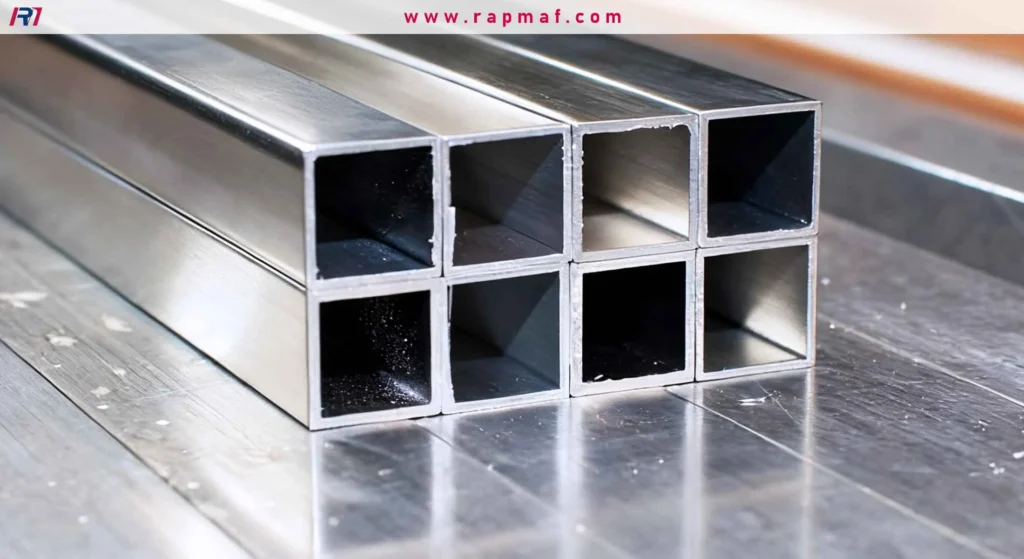
- Aluminum (with one ‘i’): This is the standard spelling and pronunciation in the United States and Canada.
- Aluminium (with a second ‘i’): This is the standard spelling used by the rest of the English-speaking world, including the United Kingdom, Australia, and New Zealand. It is also the official spelling designated by the IUPAC (International Union of Pure and Applied Chemistry).
The divergence dates back to the early 19th century and the British chemist Sir Humphry Davy. He initially named the element “alumium,” then “aluminum,” and finally settled on “aluminium” to better conform with the “-ium” suffix of other elements like sodium and potassium. American chemists, however, largely stuck with the simpler “aluminum” spelling.
For this article, I’ll be using the American spelling, “aluminum,” as it aligns with the primary keyword data, but rest assured, we are talking about the exact same incredible Element 13.
The Atomic Heart: Why Aluminum Behaves Like It Does
Everything a material is and does starts with its atoms. Aluminum sits at position #13 on the Periodic Table of Elements. This isn’t just a number; it’s the key to its entire personality. It means every single aluminum atom has 13 protons in its nucleus and, when stable, 13 electrons orbiting it.
Those outer electrons are the crucial ones. Aluminum atoms are very “generous”—they readily give up their three outermost electrons to form strong metallic bonds. This willingness to share electrons is what makes aluminum an excellent conductor of both electricity and heat. This atomic structure is also the reason it’s a relatively light element, which lays the foundation for its most famous physical property: its low density.
From Red Earth to Silver Metal: The Incredible Journey from Bauxite Ore
Unlike gold or silver, you will never find a nugget of pure aluminum in the ground. It is far too reactive. Instead, it’s tightly locked away within a reddish-brown, clay-like rock called bauxite. Bauxite is the world’s primary source of aluminum, and it’s typically found in a belt around the equator.
Getting the aluminum out of this rock is an energy-intensive, two-stage industrial miracle.

Stage 1: The Bayer Process (Turning Bauxite into Alumina)
The first step is to refine the bauxite ore into a fine, white powder called alumina, or aluminum oxide (Al₂O₃).
- Crushing & Grinding: The raw bauxite is crushed and ground into a fine slurry.
- Digestion: This slurry is pumped into high-pressure vessels and mixed with a hot solution of caustic soda (sodium hydroxide). This dissolves the aluminum-bearing compounds, leaving behind impurities like iron oxides (which give bauxite its red color) as a solid waste product called “red mud.”
- Precipitation: The now-purified, aluminum-rich liquid is cooled. Tiny seed crystals of alumina are added, causing the dissolved alumina to precipitate out of the solution as solid, white crystals.
- Calcination: These crystals are then washed and heated in massive kilns to over 1,100°C (2,000°F). This final step drives off any remaining water, leaving us with pure, sandy-white alumina powder.
Stage 2: The Hall-Héroult Process (Turning Alumina into Aluminum)
This is where the magic really happens. This process, developed independently in 1886 by Charles Martin Hall in the US and Paul Héroult in France, is what made aluminum commercially viable. Before this, aluminum was more valuable than gold.
- Dissolving: The alumina powder is dissolved in a molten bath of cryolite (another aluminum-based mineral) inside large, carbon-lined steel pots called “cells.” This is done because alumina’s melting point is extremely high (over 2,000°C), while the cryolite solution allows it to be dissolved at a much more manageable 950°C.
- Electrolysis: A massive direct current of electricity is passed through the molten solution. This powerful current breaks the strong chemical bond between the aluminum and oxygen atoms in the alumina.
- Separation: The freed oxygen atoms are attracted to the carbon anodes in the cell (and are consumed in the process), while the heavier, molten pure aluminum atoms sink to the bottom of the pot.
- Tapping: Periodically, this liquid, pure aluminum is siphoned off and cast into large ingots, ready to be used or mixed into alloys.
This process is so energy-intensive that aluminum is often called “congealed electricity.” Aluminum smelters are almost always located where electricity is abundant and cheap, like near hydroelectric dams.
The Invisible Shield: Aluminum’s Secret to Immortality
Here’s the great paradox of aluminum: it’s a highly reactive metal, yet it is famous for its exceptional corrosion resistance. How can this be?
The answer is a phenomenon called passivation.
- The moment pure, bare aluminum is exposed to the oxygen in the air, its surface instantly reacts to form a microscopic, invisible layer of aluminum oxide (Al₂O₃).
- This oxide layer is incredibly hard (it’s essentially a form of sapphire), dense, and non-reactive.
- Crucially, it is perfectly bonded to the aluminum surface beneath it.
- If this protective layer is ever scratched or damaged, a new layer instantly forms, “healing” the surface and protecting the metal from further corrosion.
This is the complete opposite of how iron rusts. Iron rust (iron oxide) is flaky and porous. It flakes off, exposing fresh iron to the air, which then rusts, and this cycle continues until the metal is destroyed. Aluminum’s “rust” is its ultimate shield. This property is why aluminum windows, roofing, and structures can last for decades with no paint or coating.
The Engineer’s Toolkit: Aluminum’s 5 Core Properties In-Depth
Now that we have a solid ingot of pure aluminum, what can we actually do with it? Its usefulness comes down to a unique combination of properties that few other materials can match. Understanding these is the key to understanding why aluminum is in everything from your kitchen to the stratosphere.
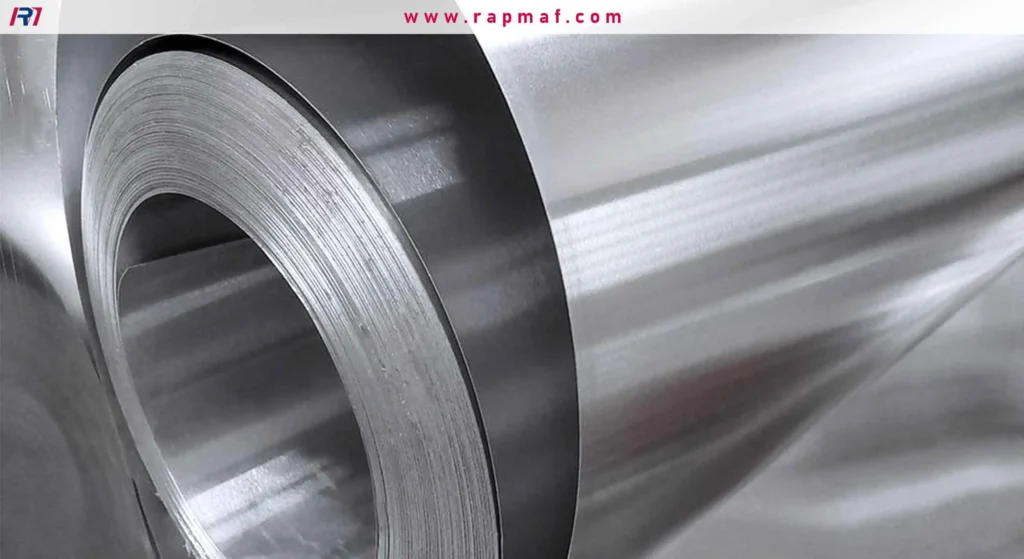
Property #1: Low Density (The Featherweight Champion)
This is aluminum’s superstar trait. It is remarkably light for a metal.
- The Numbers: Aluminum has a density of approximately 2.7 grams per cubic centimeter (g/cm³). To put that in perspective, steel is around 7.85 g/cm³, and copper is 8.96 g/cm³. This means for the same size block, aluminum is roughly one-third the weight of steel.
- The Engineering Implication: High Strength-to-Weight Ratio. While pure aluminum is soft, its alloys can be incredibly strong. When you combine high strength with low weight, you get a material that is perfect for anything that needs to move or fly. Every gram saved in an aircraft or a vehicle translates directly into better fuel efficiency and higher payload capacity. This is the single most important reason why the aerospace and automotive industries are built on aluminum.
Property #2: Excellent Thermal Conductivity (The Heat Mover)
Aluminum is a thermal superhighway. It transfers heat energy with incredible efficiency.
- The Numbers: Aluminum’s thermal conductivity is about 237 Watts per meter-Kelvin (W/m·K). This is significantly better than steel (
50 W/m·K) and even cast iron (52 W/m·K). While it’s not quite as good as pure copper (~401 W/m·K), it’s much lighter and cheaper, making it the superior choice in many applications. - The Engineering Implication: This property makes aluminum the ideal material for anything designed to manage heat, either by getting rid of it (cooling) or distributing it evenly (heating). Prime examples include:
- Heatsinks: The finned aluminum structures on computer processors, LEDs, and power electronics are designed to pull heat away from sensitive components and dissipate it into the air.
- Cookware: High-quality pots and pans often have an aluminum core to spread heat from the burner evenly across the bottom, preventing “hot spots” that burn food.
- Radiators & HVAC Systems: Car radiators and air conditioning components use aluminum’s ability to quickly transfer heat between liquid coolant and the air.
Property #3: High Electrical Conductivity (The Efficient Conductor)
Similar to how it handles heat, aluminum is also an excellent conductor of electricity.
- The Numbers: On a volume basis, aluminum has about 61% of the conductivity of copper, which is the benchmark for electrical wiring. However—and this is the critical part—because aluminum is so much lighter, an aluminum wire with the same electrical resistance as a copper wire will have only half the weight.
- The Engineering Implication: For applications where weight is a major concern, aluminum is the winner. This is why virtually all of the world’s high-voltage overhead power transmission lines are made from aluminum (often reinforced with a steel core for strength, known as ACSR cable). Using copper would make the cables so heavy they would require many more support towers, dramatically increasing the cost of infrastructure.
Property #4: High Ductility and Malleability (The Shape-Shifter)
These two terms describe a material’s ability to be deformed without breaking.
- Ductility: The ability to be drawn into a thin wire.
- Malleability: The ability to be hammered or rolled into a thin sheet.
- The Engineering Implication: Aluminum is exceptionally ductile and malleable, especially when heated. This allows it to be shaped through a huge variety of manufacturing processes that are difficult or impossible with more brittle metals. This includes:
- Rolling: How we make aluminum foil, which can be rolled to be just a few micrometers thick.
- Extrusion: How we create complex cross-sectional shapes, like window frames and heatsink fins, by pushing a hot billet of aluminum through a shaped die.
- Forging: How we create high-strength parts like aircraft components and automotive wheels.
- Deep Drawing: How a flat disc of aluminum is pressed into the seamless body of a beverage can.
Property #5: Infinite Recyclability (The Sustainable Choice)
This is aluminum’s environmental and economic superpower.
- The Science: Aluminum does not lose its properties when it is remelted and recycled. It can be reused over and over again in a closed loop without any degradation in quality.
- The Energy Savings: Recycling aluminum requires only 5% of the energy needed to produce new, primary aluminum from bauxite ore. This is because recycling bypasses the incredibly energy-intensive Bayer and Hall-Héroult processes.
- The Impact: This has staggering implications. It is estimated that nearly 75% of all aluminum ever produced is still in use today, having been recycled multiple times. This makes it a cornerstone of the sustainable “circular economy.”
Head-to-Head: Aluminum vs. Other Common Metals
To truly grasp aluminum’s unique position, let’s see how its key properties stack up against its main industrial competitors in a simplified chart.
| Property | Aluminum (Al) | Low-Carbon Steel (Fe) | Copper (Cu) | Titanium (Ti) | Clive’s Engineering Bottom Line |
|---|---|---|---|---|---|
| Density (g/cm³) | 2.7 (Very Low) | 7.85 (High) | 8.96 (Very High) | 4.5 (Low) | Winner: Aluminum. The clear champion for lightweight applications. |
| Strength (Typical Alloy) | Good to High | Very High | Low to Medium | Very High | Winner: Steel/Titanium. For pure strength, steel and titanium are superior, but aluminum wins on strength-to-weight. |
| Corrosion Resistance | Excellent | Poor (Rusts) | Good | Excellent | Winner: Aluminum/Titanium. Aluminum’s self-healing oxide layer gives it a massive advantage over steel. |
| Thermal Conductivity | Excellent | Poor | Excellent+ | Very Poor | Winner: Copper. Copper is the king, but aluminum is the much lighter, more cost-effective alternative. |
| Electrical Conductivity | Good | Poor | Excellent+ | Very Poor | Winner: Copper. Again, copper is the best conductor by volume, but aluminum wins on a conductivity-per-weight basis. |
| Cost (Relative) | Low | Very Low | High | Very High | Winner: Steel. Steel is the cheapest structural metal, but aluminum offers premium properties at a moderate cost. |
Case Study: The Overheating Medical Diagnostic Device
A few years ago, a client came to us at RM (Rapid Manufacturing) with a serious problem. They had designed a new, compact tabletop medical diagnostic device. The device worked brilliantly, but after about 20 minutes of operation, its internal processors would overheat, causing the system to crash.
The Problem:
The device was sealed in a sleek, injection-molded plastic enclosure. There was no room for a fan, as that would introduce noise and a point of failure, both unacceptable in a medical setting. The heat generated by the main processing board had nowhere to go. It was a classic thermal management nightmare.
Our Analysis & Solution:
The client’s initial thought was to use a small copper plate to draw heat away, but our analysis showed this wouldn’t be enough.
- Copper’s Limitations: While copper is a fantastic conductor, it was too heavy and would concentrate the heat in one spot before it could dissipate.
- Steel’s Failure: Steel was a non-starter. Its poor thermal conductivity meant it would act more like an insulator than a conductor.
- The Aluminum Solution: We proposed redesigning the entire internal chassis of the device to be CNC machined from a single block of 6061-T6 Aluminum. This wasn’t just a plate; the entire structural frame would now become the heatsink. We designed it with integrated fins in non-critical areas to maximize surface area.
Why Aluminum Was the Perfect Choice:
- Thermal Conductivity: The 6061 alloy would act as a massive “heat spreader,” pulling thermal energy from the processor and distributing it across the entire volume of the chassis.
- Low Density: Machining the chassis from aluminum kept the device’s overall weight within the client’s strict specifications for portability. A steel chassis would have made it unacceptably heavy.
- Machinability: 6061-T6 is a joy to machine. We could hold the tight tolerances required for mounting the circuit boards and other components, and we could create the complex cooling fins efficiently in our CNC mills.
- Corrosion Resistance: Once anodized, the aluminum chassis was durable, scratch-resistant, and completely protected from any potential corrosion.
The Result:
The new, integrated aluminum chassis-heatsink worked perfectly. The device’s operating temperature dropped by over 30°C, well within the safe limits of the electronics. It ran silently and reliably for hours on end. By leveraging the unique combination of aluminum’s properties, we solved a critical engineering problem that was threatening the viability of the entire product.
The Power of the Mix: A Deep Dive into Aluminum Alloys
We’ve talked a lot about pure aluminum, but here’s the most important secret of the industry: in nearly all engineering applications, we don’t use pure aluminum. Why? Because on its own, it’s quite soft and doesn’t have the strength required for structural components.
To unlock its true potential, we mix it with other elements in a process called alloying. Think of it like a chef adding spices to a base ingredient. By adding small, precise amounts of elements like copper, magnesium, silicon, manganese, and zinc, we can dramatically change aluminum’s properties—making it stronger, harder, and more suited for specific jobs.
These alloys are categorized into a standardized numbering system, and knowing the basics is like learning the language of the metal.
Understanding the Alloy Series
Wrought aluminum alloys (those shaped by rolling, extruding, or forging) are designated by a four-digit number. The very first digit tells you the main alloying element and the alloy’s primary characteristic.
- 1xxx Series (Pure Aluminum): This is as close to pure as it gets (99.0% or higher). It’s not strong, but it’s extremely corrosion-resistant and highly conductive. Used for chemical tanks, electrical busbars, and metalizing.
- 3xxx Series (Manganese): Manganese is the main alloying element. This series is known for its moderate strength and excellent workability. The most common alloy in the world, 3003, is found in the body of every aluminum beverage can.
- 5xxx Series (Magnesium): This is the “marine grade” family. Adding magnesium provides excellent corrosion resistance, especially in saltwater environments, along with good strength. 5052 and 5083 are used extensively for boat hulls, fuel tanks, and structures exposed to the elements.
- 6xxx Series (Magnesium & Silicon): This is the workhorse of the industry, the most popular family for extrusion and general machining. The combination of magnesium and silicon makes these alloys highly versatile, with good strength, good corrosion resistance, good machinability, and they are heat-treatable. 6061-T6 is arguably the most common aluminum alloy you will encounter in CNC machining.
- 7xxx Series (Zinc): This is the high-performance, “aerospace grade” family. Zinc is the primary alloying agent, and when combined with magnesium and copper, it creates some of the highest-strength aluminum alloys available. 7075 is a prime example, with strength comparable to some steels at a fraction of the weight, making it essential for aircraft frames and high-stress components.
At RM (Rapid Manufacturing), the vast majority of our CNC work is with the 6xxx and 7xxx series alloys, as they provide the structural integrity our clients in the aerospace, medical, and robotics industries demand.
| Alloy Series | Primary Alloying Element(s) | Key Characteristics | Common Example | Heat Treatable? | Clive’s Engineering Bottom Line |
|---|---|---|---|---|---|
| 1xxx | None (99%+ Pure Al) | Excellent Corrosion Resistance, High Conductivity | 1100 | No | The specialist. For when you need aluminum’s purest properties, not strength. |
| 3xxx | Manganese (Mn) | Good Workability, Moderate Strength | 3003 | No | The commodity champion. The backbone of the massive beverage can industry. |
| 5xxx | Magnesium (Mg) | Excellent Saltwater Corrosion Resistance | 5052 | No | The marine alloy. If your part is going on a boat or near the coast, start here. |
| 6xxx | Magnesium (Mg) & Silicon (Si) | Versatile, Good Strength, Weldable, Machinable | 6061 | Yes | The All-Rounder. The default choice for most structural and machined parts. |
| 7xxx | Zinc (Zn) | Highest Strength, Good Machinability | 7075 | Yes | The Aerospace King. When you need maximum strength-to-weight and cost is secondary. |
A Brief History: From Napoleon’s Cutlery to the Space Age
The story of aluminum’s rise is a perfect illustration of how a single technological breakthrough can change the world.
- The Age of Rarity (Early 1800s): Aluminum was first isolated in 1825, but the process was incredibly difficult and expensive. For decades, it was considered a precious metal. Emperor Napoleon III of France was famously said to have reserved his prized set of aluminum cutlery for his most honored guests; everyone else had to make do with gold. The tip of the Washington Monument, completed in 1884, was capped with a 100-ounce pyramid of pure aluminum as a symbol of American industrial prowess—at the time, it was the largest single piece of cast aluminum in the world.
- The Breakthrough (1886): This all changed with the invention of the Hall-Héroult process, which we discussed earlier. This electrolytic reduction process made it possible to produce aluminum on an industrial scale at a tiny fraction of its former cost. Suddenly, aluminum went from being rarer than gold to a viable commercial material.
- The Age of Aviation (Early 20th Century): The Wright brothers used a lightweight aluminum-copper alloy for parts of their engine crankcase in 1903. This was a sign of things to come. The metal’s incredible strength-to-weight ratio made it the perfect material for aircraft, and its production soared during the World Wars as nations raced to build faster and more capable planes.
- The Modern Era (Post-WWII to Today): After the wars, the massive aluminum production capacity was turned towards civilian use. This sparked an explosion of innovation, leading to the aluminum cans, window frames, power lines, and consumer electronics that define our modern world. Today, it is the second most widely used metal on Earth, after iron.
Where is Aluminum Used? A World Built on Element 13
The unique combination of properties we’ve discussed makes aluminum’s applications nearly limitless. Here are its biggest contributions:
- Transportation: This is the largest market. From the fuselage and wings of every commercial airliner to the engine blocks, wheels, and body panels of modern cars, aluminum makes things lighter, faster, and more fuel-efficient.
- Packaging: The aluminum beverage can is a masterpiece of engineering—lightweight, stackable, and infinitely recyclable. Aluminum foil and packaging protect food and medicine.
- Construction: Window and door frames, roofing, siding, and curtain walls on skyscrapers rely on aluminum’s corrosion resistance, low weight, and ability to be extruded into complex shapes.
- Electrical Engineering: Though less conductive than copper by volume, its low density makes it the material of choice for nearly all overhead high-voltage power lines.
- Consumer Goods & Electronics: The sleek, durable bodies of laptops, smartphones, and tablets are often machined from solid blocks of aluminum. It’s also used in everything from high-end cookware to designer furniture.
Conclusion: It’s More Than a Metal, It’s a Solution
So, what is aluminum?
It is the promise of flight and the foundation of fuel efficiency. It is the vessel that protects our food and the conductor that carries our power. It is a metal born from a complex chemical process, shielded by an invisible, self-healing skin, and capable of being endlessly reborn through recycling.
At our AS9100 certified facility, when we load a block of 7075-T6 aluminum into one of our 5-axis CNC machines, we don’t just see a piece of metal. We see the culmination of over a century of scientific discovery. We see a material that allows us to machine components with the precision of a micrometer and the strength to withstand the stresses of flight.
From the common can to the custom aerospace component, aluminum is not just a material choice; it is often the very best engineering solution.
Frequently Asked Questions (FAQ)
1. What is aluminium metal?
Aluminum is a silvery-white, lightweight chemical element (symbol Al, atomic number 13). It is the most abundant metal in the Earth’s crust but is always found combined with other elements in ores like bauxite. It is known for its low density, high corrosion resistance, and high conductivity.
2. Is aluminum a type of metal?
Yes, absolutely. Aluminum is a post-transition metal on the periodic table of elements. It exhibits all the classic properties of a metal: it is solid at room temperature, shiny, malleable, ductile, and an excellent conductor of heat and electricity.
3. Is aluminium a pure metal?
In its raw, smelted form, it can be 99%+ pure. However, pure aluminum is relatively soft, so for almost all commercial and structural applications, it is mixed with other elements (like copper, zinc, or silicon) to form an aluminum alloy, which is much stronger.
4. What metals mix with aluminum?
The most common metals and elements mixed with aluminum to create alloys are copper, magnesium, manganese, silicon, and zinc. Each one imparts different properties: zinc adds the highest strength, magnesium improves corrosion resistance, silicon lowers the melting point for casting, and copper and manganese add strength and workability.
References
- The Aluminum Association: The primary industry association for the aluminum industry in North America, providing extensive data on production, applications, and standards.
- U.S. Geological Survey (USGS), Aluminum Statistics and Information: The definitive government source for data on global bauxite mining, aluminum production, and consumption.
- ASM International, “Alloy Designations for Wrought Aluminum and Wrought Aluminum Alloys”: A professional organization for materials scientists and engineers, providing the technical standards and handbooks that govern alloy specifications.
Disclaimer
The information on this page is for informational purposes only. RM makes no representations or warranties, express or implied, as to the accuracy or completeness of this information. For any third-party services procured through the RM network, it is the buyer’s responsibility to specify and confirm performance parameters, tolerances, materials, and workmanship during the quotation process. For more detailed information, please do not hesitate to contact us.
RM: Your Precision Manufacturing Partner
RM is an industry leader in custom manufacturing solutions. With over 20 years of profound experience, we have become the trusted partner for more than 5,000 clients worldwide. We specialize in a comprehensive range of manufacturing services—including high-precision CNC machining, sheet metal fabrication, 3D printing, injection molding, and metal stamping—to provide you with a true one-stop-shop experience.
Our world-class facility is equipped with over 100 state-of-the-art 5-axis machining centers and operates in strict compliance with the ISO 9001:2015 quality management system. We are dedicated to providing solutions that blend speed, efficiency, and exceptional quality to customers in over 150 countries. From rapid prototyping to large-scale production, we promise delivery in as fast as 24 hours, helping you gain a competitive edge in the market. Choosing RM means selecting an efficient, reliable, and professional manufacturing ally.
Explore our capabilities today by visiting our website: www.rapmaf.com







20 Responses