



If you’ve ever tried to select a metal for a project, you’ve likely fallen into a rabbit hole of confusing terms. What’s the difference between plain “steel” and “carbon steel”? Is “alloy steel” just a fancier, more expensive version? And what on earth is “steel of steel”? It feels like a trick question.
Let’s clear the air immediately.
The Quick Answer: What is the difference between Carbon Steel and Alloy Steel?
Carbon Steel is the most basic form of steel, composed almost entirely of iron and carbon (less than 2%), with only trace amounts of other elements. Its properties are determined almost exclusively by its carbon content. Alloy Steel is carbon steel that has had other elements (like chromium, nickel, or molybdenum) intentionally added to it to enhance specific properties like strength, hardness, corrosion resistance, or performance at high temperatures.
The “steel of steel” confusion: There is no material called “steel of steel.” This phrase reflects a common misunderstanding. When people say “steel” in a general sense, they are almost always referring to carbon steel, which is the foundational “steel of all steels.”
This isn’t just a matter of semantics. Choosing the wrong type of steel can lead to catastrophic failure, from a knife that won’t hold an edge to a structural beam that can’t hold its load. The confusion arises because all these materials are part of the same family, but they are not interchangeable.
In this definitive guide, we at RM (Rapid Manufacturing) will pull back the curtain. We work with these materials every single day, machining them into high-precision components for industries from aerospace to energy. We will walk you through the fundamental science, the practical differences, and the real-world applications so you can understand not just what they are, but why you would choose one over the other.
What is Steel? The Common Ancestor
Before we can appreciate the differences, we must understand the shared DNA. At its most basic level, steel is an alloy of iron and carbon.
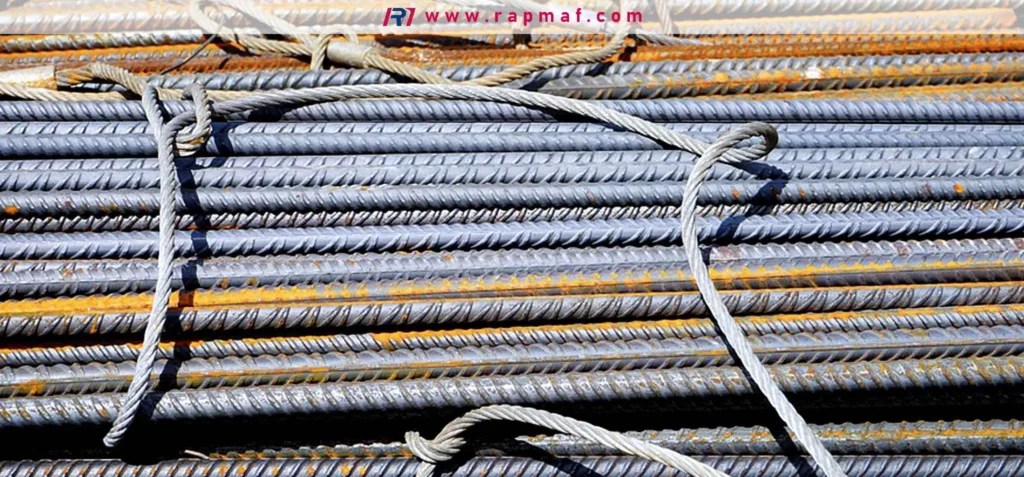
Pure iron is a relatively soft, weak metal. For millennia, humanity’s greatest challenge was making it stronger. The breakthrough came with the discovery that adding a small amount of carbon—often less than 1% by weight—had a transformative effect. The tiny carbon atoms embed themselves within the iron’s crystal lattice structure, acting like wedges that prevent the iron atoms from easily sliding past one another. This simple act of molecular disruption is what gives steel its signature strength and hardness.
Think of it like this: pure iron is a stack of smooth glass plates that slide apart easily. Steel is a stack of the same plates with grains of sand (carbon) in between, making them much harder to move.
Every material we discuss in this article—carbon steel, alloy steel, and even stainless steel—starts with this fundamental iron-carbon recipe. The differences emerge from what happens next.
Meet Carbon Steel: The Workhorse of the World
Carbon steel is the purest and most common member of the steel family. It represents roughly 90% of all steel production globally for one simple reason: it provides the best performance for the lowest cost across the widest range of applications.
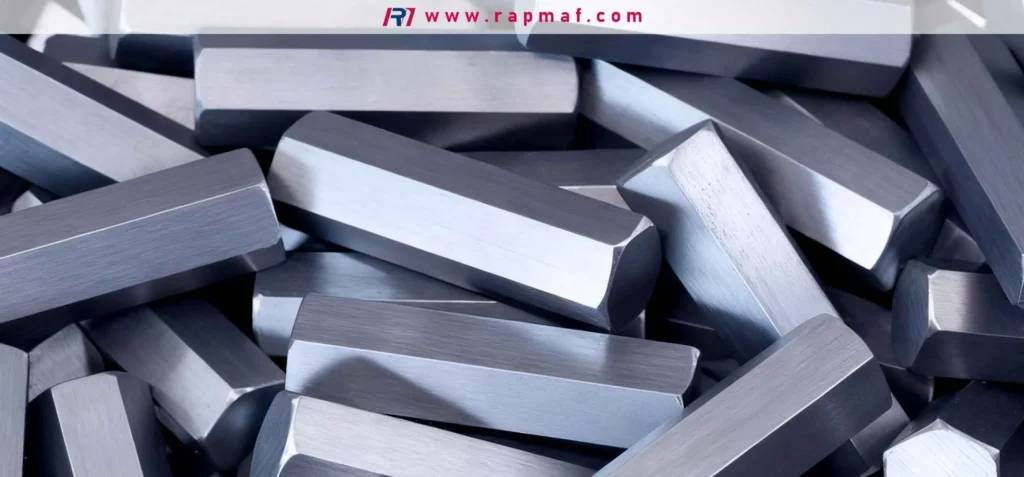
The formal definition of carbon steel is a steel where the main alloying element is carbon, and:
- No minimum content is specified for elements like chromium, nickel, molybdenum, etc.
- The specified minimum for copper is less than 0.40%.
- The maximum content for elements like manganese (1.65%) and silicon (0.60%) does not exceed certain thresholds.
In simple terms, it’s the “no-frills” steel. Its properties are almost entirely dictated by one single, critical factor: the amount of carbon it contains. This factor is so important that we classify carbon steels into three main grades.
The Carbon Content is Everything: Low, Medium, and High
Understanding these three categories is the key to understanding the entire world of steel.
1. Low-Carbon Steel (Mild Steel)
- Carbon Content: Typically 0.04% to 0.30%
- Key Properties: This is the most widely used type of steel on the planet. The low carbon content makes it soft, highly ductile (it can be bent and shaped without breaking), and easy to weld. It is relatively low-strength compared to other steels, but it’s incredibly tough and forgiving.
- Real-World Examples: Think of the materials that form the skeleton of our modern world. Car body panels, structural I-beams for buildings, pipes, and everyday sheet metal are almost all made from low-carbon steel. It’s chosen because it can be easily formed into complex shapes and welded together reliably and cheaply. Its biggest weakness is poor corrosion resistance—it rusts easily without a protective coating like paint or galvanization.
2. Medium-Carbon Steel
- Carbon Content: Typically 0.31% to 0.60%
- Key Properties: Adding more carbon increases strength and hardness but reduces ductility and toughness. Medium-carbon steel strikes a balance, offering better wear resistance than mild steel while still being reasonably workable. Crucially, this is the first category of carbon steel that responds well to heat treatment—a process of heating and cooling the metal to fine-tune its properties (a topic we’ll explore later).
- Real-World Examples: This steel is used where you need more strength and durability. Axles, gears, crankshafts, railway tracks, and large machinery parts are often made from medium-carbon steel. They need to withstand constant stress and wear without deforming, and heat treatment gives them the precise hardness and toughness required for the job.
3. High-Carbon Steel
- Carbon Content: Typically 0.61% to 1.50%
- Key Properties: This is the hardest and strongest of the carbon steels. It can hold a very sharp edge and is extremely resistant to wear and abrasion. However, this hardness comes at a steep price: high-carbon steel is very brittle. If pushed past its limit, it is more likely to crack or shatter than to bend. It is also more difficult to weld and machine.
- Real-World Examples: High-carbon steel is used for applications where hardness and edge retention are paramount. Think of cutting tools like drill bits and masonry saws, high-strength springs, and the legendary high-carbon steel kitchen knives prized by chefs for their ability to stay razor-sharp.
The Pros and Cons of Sticking to the Basics
So, why choose plain carbon steel?
- Pros: It is cheap, predictable, widely available, and easy to machine and weld (especially low-carbon grades). For a vast number of applications, its properties are more than good enough.
- Cons: It has a “ceiling” on its properties. It can only get so strong or hard. It performs poorly at extreme temperatures (both hot and cold), and most importantly, it has very poor corrosion resistance.
This performance ceiling is what led to the development of its more sophisticated cousin. We’ve seen what carbon alone can do. In the next part, we will explore what happens when you start intentionally adding a cocktail of other powerful elements to the mix: Alloy Steel.
Meet Alloy Steel: The Specialists and Super-Steels
If carbon steel is the foundational ingredient like flour or sugar, alloy steel is what you get when you start adding a carefully curated spice rack of powerful, property-altering elements.
Alloy Steel is formally defined as a steel that has specific amounts of alloying elements intentionally added to it to enhance or create properties that cannot be achieved with carbon steel alone. These additions are not random impurities; they are precise, calculated recipes designed to solve specific engineering problems.

The goal is to take the fundamental strength of carbon steel and layer on new capabilities:
- Extreme strength and hardness for cutting tools.
- Toughness to resist shattering under high-impact loads.
- Corrosion resistance to survive in harsh chemical environments.
- The ability to maintain strength at the blistering temperatures inside a jet engine.
To achieve this, metallurgists use a range of elements, each with a unique effect on the steel’s final microstructure.
The Metallurgist’s Spice Rack: Key Alloying Elements
Let’s look at some of the most common “spices” and the “flavor” they add to the steel.
- Chromium (Cr): The Superstar. Chromium is a workhorse alloying element. In smaller amounts (e.g., 1-2%), it significantly increases hardness, strength, and wear resistance. It’s a key ingredient in bearing steels and high-strength components. In larger amounts (above 10.5%), it does something magical: it creates a passive, invisible layer of chromium oxide on the steel’s surface, which provides exceptional corrosion resistance. This is the defining ingredient of stainless steel.
- Nickel (Ni): The Toughness Enhancer. While chromium adds hardness, it can sometimes increase brittleness. Nickel is the perfect partner, as its primary role is to increase toughness and impact strength, even at low temperatures. It also improves corrosion resistance and is a vital component in many high-strength, tough stainless steels (like the common 304 grade).
- Molybdenum (Mo): The High-Temp Hero. Often called “moly,” this element is crucial for applications involving heat. It helps the steel resist “creep”—the tendency to slowly deform under stress at high temperatures. It also significantly increases strength, hardness, and corrosion resistance, especially against chlorides.
- Manganese (Mn): The Hardness Booster. While manganese is present in all carbon steels (it helps remove impurities during production), it’s added in higher concentrations in alloy steels to increase hardness and wear resistance without making the steel overly brittle. Hadfield steel, or “manganese steel” (containing ~13% Mn), is famous for its extreme impact strength and is used in rock crushers and mining equipment.
- Vanadium (V) & Tungsten (W): The Carbide Formers. These elements are masters of creating incredibly hard microscopic particles within the steel called carbides. Vanadium promotes a fine-grained structure, increasing toughness and strength. Tungsten provides extreme hardness and retains that hardness even at red-hot temperatures. These two are the essential ingredients for High-Speed Steel (HSS), the material used to make drill bits and cutting tools that can machine other steels.
Low-Alloy vs. High-Alloy: A Question of Degree
The world of alloy steels is vast, so we generally split it into two main categories based on how much “spice” has been added.
- Low-Alloy Steels: These steels have a total alloying content of less than 5%. The goal here isn’t to create a completely new type of material, but rather to significantly enhance the mechanical properties of carbon steel. They are the backbone of high-performance machinery. A classic example is 4140 steel, a chromium-molybdenum steel known for its excellent blend of strength, toughness, and wear resistance after heat treatment. It’s used for everything from automotive axles to industrial gears.
- High-Alloy Steels: These steels have a total alloying content greater than 5%. Here, the goal is to create materials with exceptional properties for extreme environments. The most famous family of high-alloy steels is Stainless Steel, defined by its minimum of 10.5% chromium. Another key group is Tool Steels, which contain complex blends of tungsten, vanadium, and other elements to create materials hard and durable enough to cut and shape other metals.
The Head-to-Head Showdown: Carbon Steel vs. Alloy Steel
Now that we understand both families, we can put them side-by-side. This table provides a direct comparison of their key properties, which is the starting point for any material selection process.
| Property | Carbon Steel | Alloy Steel | Winner |
|---|---|---|---|
| Strength & Hardness | Good to excellent, depends heavily on carbon content and heat treatment. | Excellent to exceptional. Can be engineered for much higher strength-to-weight ratios and specialized hardness. | Alloy Steel |
| Toughness & Ductility | Generally good, especially in low-carbon grades. High-carbon grades are brittle. | Can be engineered for extreme toughness (e.g., with nickel) even at very high strength levels. | Alloy Steel |
| Corrosion Resistance | Poor. Rusts easily without protective coatings. | Good to exceptional. The primary reason for choosing stainless steel (a high-alloy steel). | Alloy Steel |
| Wear Resistance | Fair to good in medium and high-carbon grades. | Excellent. Can be designed with hard carbides and high surface hardness for extreme abrasion resistance. | Alloy Steel |
| High-Temp Performance | Poor. Loses strength rapidly at elevated temperatures. | Excellent. Molybdenum and tungsten allow it to retain strength and resist creep at high temperatures. | Alloy Steel |
| Machinability / Weldability | Generally excellent, especially for low-carbon “mild steel”. Becomes more difficult with higher carbon. | Varies widely. Some are easily machined, while highly-alloyed tool steels are extremely difficult to work with. | Carbon Steel (for ease of use) |
| Cost | Low. This is its single greatest advantage. | Medium to Very High. The alloying elements (especially nickel and molybdenum) are expensive. | Carbon Steel (for economy) |
As the table clearly shows, from a pure performance perspective, alloy steel is the superior material. It can be stronger, tougher, more resistant to heat, wear, and corrosion. However, this performance comes at a significant cost, both in terms of raw material price and the difficulty of manufacturing. This leads us to the most important rule in engineering material selection: you don’t choose the “best” material; you choose the right material for the job.
Case Study: A Tale of Two Gears at RM
A client in the heavy mining industry came to us with a design for a large, custom gearbox. Their initial material specification for a critical transmission gear was a high-carbon steel (like 1095).
- The Client’s Logic: “The gear teeth are under high pressure and need to resist wear. High-carbon steel is very hard and strong. It’s also relatively cheap.”
- Our Analysis at RM: The client’s logic was sound, but incomplete. We looked at the full operational environment. A mining gearbox doesn’t just experience steady pressure; it experiences sudden, massive shock loads when the machinery hits hard rock. While high-carbon steel is indeed hard, it’s also very brittle. A severe shock load would be likely to fracture a gear tooth, leading to catastrophic gearbox failure and tens of thousands of dollars in operational downtime.
- The Solution: We recommended a change to a low-alloy steel: AISI 4340. This is a nickel-chromium-molybdenum alloy steel.
- The chromium and molybdenum allowed us to heat-treat the gear to achieve a surface hardness that was even higher than the high-carbon steel, providing superior wear resistance.
- The nickel was the crucial difference-maker. It provided immense toughness and impact strength throughout the core of the gear.
- The Result: The 4340 alloy steel gear could withstand both the constant wear and the sudden shock loads. The initial material cost was three times higher than the high-carbon steel. However, the lifespan of the gearbox was extended by a factor of ten, saving the client an immense amount in maintenance and lost productivity. This wasn’t about choosing a “stronger” steel; it was about choosing a steel with the correct combination of properties for the application’s demands.
We’ve now seen the fundamental differences and the strategic trade-offs. But this leaves us with the ultimate questions every engineer must answer: How do you quantify which steel is stronger? Which one is truly “better”? And how do you make the final, definitive choice for your project? We will answer these questions in the final part of our guide.
Making the Final Choice: The Engineer’s 4-Factor Matrix
At RM, our material selection process for any project, from a simple bracket to a complex aerospace component, is guided by a four-factor matrix. We don’t ask “Which steel is better?”; we ask “Which steel is optimal when all critical factors are considered?”
Factor 1: Mechanical Performance Requirements
This is the most obvious starting point. What does the part actually have to do? We go far beyond just asking for “strength.”
- Tensile Strength & Yield Strength: This is the classic measure of strength—how much pulling force a material can withstand before it permanently deforms (yield) or breaks (tensile). This is the number one priority for components under static load, like a structural I-beam in a building or the chain links in a crane. An alloy steel will almost always offer a higher strength-to-weight ratio, but a simple low-carbon steel is more than strong enough for 90% of structural applications.
- Hardness & Wear Resistance: How well does the material resist scratching, abrasion, and indentation? For parts that slide, rub, or cut, this is paramount. The teeth on a mining gear, the surface of a ball bearing, or the edge of a cutting tool all depend on hardness. Here, heat-treated high-carbon steels and specialized alloy steels (especially tool steels) are the only viable options.
- Toughness (Impact Resistance): This is perhaps the most misunderstood property. Toughness is a material’s ability to absorb energy and deform without fracturing. It’s the opposite of brittleness. For a component that will experience sudden shock loads—like a sledgehammer, a truck’s axle, or the landing gear of an aircraft—toughness is far more important than raw hardness. This is where low-carbon steels and nickel-alloyed steels excel. A brittle, high-carbon steel would shatter.
- Fatigue Resistance: Will the part be subjected to millions of repetitive cycles of loading and unloading? A connecting rod in an engine, a spring, or a rotating shaft all experience cyclic stress. Over time, tiny microscopic cracks can form and grow, leading to sudden failure far below the material’s maximum tensile strength. Alloy steels, particularly those with high-quality processing to remove impurities, offer vastly superior fatigue life.
Factor 2: Operational Environment
A part doesn’t exist in a vacuum. Where will it live, and what is trying to destroy it?
- Corrosion: Will the part be exposed to moisture, salt, or chemicals? For carbon steel, the answer to this is a foregone conclusion: it will rust. It must be painted, plated, or otherwise coated for protection. If the application makes coatings impractical or if the environment is highly corrosive (e.g., marine hardware, chemical processing tanks), then a high-alloy stainless steel is the only long-term solution.
- Temperature: Will the part operate at extreme temperatures?
- High Temperatures: As temperatures rise, carbon steel rapidly loses its strength in a process called “creep.” For components inside a jet engine, a furnace, or a high-pressure boiler, you need heat-resistant alloy steels containing molybdenum and tungsten to maintain their integrity.
- Low Temperatures: Many steels, including common carbon steels, can become brittle at very low temperatures. For cryogenic applications (e.g., storing liquid nitrogen), you need specific nickel-alloyed steels that retain their toughness in the extreme cold.
Factor 3: Manufacturability and Design
An exotic super-alloy is useless if you can’t form it into the shape you need.
- Machinability: How easily can the material be cut, drilled, and milled? Low-carbon “mild” steel is a dream to machine, which keeps manufacturing costs low. As you increase carbon content and add alloying elements, the steel becomes harder and more difficult to cut, requiring more robust tooling, slower speeds, and longer cycle times, all of which drive up the cost.
- Weldability: Can the material be reliably welded? Low-carbon steel is very easy to weld, creating strong and dependable joints. High-carbon and many alloy steels require special pre-heating, post-heating, and filler materials to prevent the weld area from becoming brittle and cracking.
- Formability: Can the material be bent, stamped, or forged into shape? The soft, ductile nature of low-carbon steel is what makes it perfect for car body panels and stamped enclosures. High-strength alloy steels are far less forgiving.
Factor 4: Total Cost (The Bottom Line)
Finally, we must consider the cost, but we look at the total cost of ownership, not just the price per kilogram.
- Material Cost: Carbon steel is one of the cheapest and most abundant engineering materials on the planet. Alloying elements like nickel, chromium, and vanadium are expensive, so alloy steels will always cost more upfront.
- Manufacturing Cost: As noted above, the higher difficulty in machining and welding alloy steels adds significant cost.
- Lifecycle Cost: This is where the calculation flips. The alloy steel gear in our case study cost more initially, but it saved the client a fortune in avoided downtime and replacement costs. A stainless steel component that lasts for 30 years in a corrosive environment is far cheaper in the long run than a carbon steel part that needs to be replaced every two years.
Solving the Mystery: What is “Steel of Steel”?
Now we can finally address the confusing phrase in the original search query. In the world of metallurgy and engineering, there is no technical classification for “steel of steel.” It is not a grade, a type, or a standard.
Based on our experience with global clients, this phrase typically arises from one of two places:
- A Translation Issue: It’s often a literal, non-native translation of a question that means, “What is the most basic, fundamental type of steel?” or “What is plain, ordinary steel?”
- A Philosophical Question: Sometimes it’s a way of asking, “What is the essence of steel? What defines it at its core?”
In both cases, the answer is unequivocally Carbon Steel.
Carbon steel is the very foundation of the entire steel family. It represents the direct relationship between iron and carbon, the two essential ingredients. All other steels—alloy, stainless, tool steel—are modifications of this fundamental recipe. So, if you’re looking for the “steel of steel,” the baseline, the original archetype from which all others are derived, you are looking for carbon steel.
The Final Verdict: There is No “Best” Steel, Only the “Right” Steel
The debate between carbon steel and alloy steel is not about finding a single winner. It’s about recognizing that you have a versatile, cost-effective generalist and a powerful, expensive specialist.
- Choose Carbon Steel when: Your primary driver is cost, manufacturability is important, and the performance requirements for strength, wear, and corrosion are moderate. It is the default, common-sense choice for the vast majority of engineering applications.
- Choose Alloy Steel when: You have a specific, challenging problem that carbon steel cannot solve. You need exceptional strength-to-weight, extreme hardness, toughness under impact, or the ability to survive in high temperatures or corrosive environments. You are willing to pay a premium for a premium solution.
Understanding this distinction is the key to designing and manufacturing products that are not just functional, but also efficient, reliable, and economical.
Need help selecting the right steel for your next project? The engineering team at RM has decades of experience in material science and advanced manufacturing. Contact us today to get a quote and leverage our expertise.
Frequently Asked Questions (FAQ)
Which is better, carbon steel or alloy steel?
Neither is inherently “better”; they are suited for different purposes. Carbon steel is better for general-purpose applications where cost and ease of manufacturing are key. Alloy steel is better for high-performance applications that demand specific properties like extreme strength, toughness, or corrosion resistance that carbon steel cannot provide.
What are the 4 types of steel?
The four main categories of steel are:
- Carbon Steels: The largest group, where properties are defined by carbon content.
- Alloy Steels: Contain specific added elements (like nickel, chromium, molybdenum) to enhance properties.
- Stainless Steels: A specific type of high-alloy steel containing at least 10.5% chromium for corrosion resistance.
- Tool Steels: Highly-alloyed steels designed for extreme hardness and wear resistance, used to make tools, dies, and molds.
What’s better, alloy steel or steel?
This is a common point of confusion. When people say “steel” in a general context, they are usually referring to carbon steel. Therefore, the question is the same as the first one. Alloy steel offers higher performance in specific areas (strength, toughness, etc.), while “steel” (carbon steel) is more economical and easier to work with.
What is the weakest steel?
The “weakest” steel in terms of tensile strength and hardness is typically low-carbon steel (e.g., 1018 or A36). However, this “weakness” is coupled with very high ductility and toughness, making it extremely useful. It’s easy to bend, form, and weld without breaking, which is why it’s used for everything from car bodies to structural beams.
References
- ASM International. (2018). ASM Handbook, Volume 1: Properties and Selection: Irons, Steels, and High-Performance Alloys. https://www.asminternational.org/search/-/journal_content/56/10192/06612G/PUBLICATION
- Callister, W. D., & Rethwisch, D. G. (2018). Materials Science and Engineering: An Introduction (10th ed.). Wiley. https://www.wiley.com/en-us/Materials+Science+and+Engineering%3A+An+Introduction%2C+10th+Edition-p-9781119405498
- Davis, J. R. (Ed.). (1998). Metals Handbook Desk Edition (2nd ed.). ASM International.
Disclaimer
The information on this page is for informational purposes only. RM makes no representations or warranties, express or implied, as to the accuracy or completeness of this information. For any third-party services procured through the RM network, it is the buyer’s responsibility to specify and confirm performance parameters, tolerances, materials, and workmanship during the quotation process. For more detailed information, please do not hesitate to contact us.
RM: Your Precision Manufacturing Partner
RM is an industry leader in custom manufacturing solutions. With over 20 years of profound experience, we have become the trusted partner for more than 5,000 clients worldwide. We specialize in a comprehensive range of manufacturing services—including high-precision CNC machining, sheet metal fabrication, 3D printing, injection molding, and metal stamping—to provide you with a true one-stop-shop experience.
Our world-class facility is equipped with over 100 state-of-the-art 5-axis machining centers and operates in strict compliance with the ISO 9001:2015 quality management system. We are dedicated to providing solutions that blend speed, efficiency, and exceptional quality to customers in over 150 countries. From rapid prototyping to large-scale production, we promise delivery in as fast as 24 hours, helping you gain a competitive edge in the market. Choosing RM means selecting an efficient, reliable, and professional manufacturing ally.
Explore our capabilities today by visiting our website: www.rapmaf.com







8 Responses