



As a manufacturing engineer at RM, I deal with the consequences of one particular chemical reaction more than any other. It’s a force that can turn a billion-dollar bridge into a pile of dust, but also a process we can harness to create stunning, durable finishes on parts.
That force is oxidation.
But before we dive in, let’s clear up the single biggest point of confusion that brings people to this topic.
TL;DR: Oxidation vs. Oxidization—What’s the Difference?
There is no difference in meaning. “Oxidation” and “oxidization” refer to the exact same chemical process.
- Oxidation is the standard, universally accepted scientific term. It is used in all academic papers, textbooks, and engineering standards.
- Oxidization is a valid, but far less common, alternative spelling. You will almost never see it used in a professional or technical context.

The Verdict: While “oxidization” isn’t technically wrong, using “oxidation” immediately signals a higher level of understanding and professionalism. For the rest of this article, and in all your future technical discussions, we will use oxidation.
My Role as an Engineer: Why Oxidation Matters at RM (Rapid Manufacturing)
My name is Clive, and I’m a senior engineer here at RM. For us, oxidation isn’t just a term in a chemistry book. It’s a daily consideration that impacts everything from material selection to the final appearance of a customer’s part.
- We Fight It: When designing a part for a marine environment, we’re in a constant battle against the aggressive oxidation caused by saltwater. Choosing the wrong grade of stainless steel can lead to catastrophic failure.
- We Control It: Sometimes, we want oxidation to happen, but only on our terms. The process of anodizing aluminum is a perfect example of controlled oxidation, where we create a beautiful and incredibly hard protective layer on the surface of a part.
- We Understand It: We know that the flash of rust on a raw steel component isn’t necessarily a defect, but a natural process that needs to be managed before the final coating is applied.
Understanding this process is fundamental to making things that last. So, let’s break it down from the ground up.
The Two Definitions of Oxidation: From Simple to Scientific
To truly grasp oxidation, you need to understand two definitions—the original, simple one, and the modern, more accurate one that chemists and engineers use.

Definition 1: The “Oxygen” Definition (The Classic View)
The word itself gives you a clue. Originally, oxidation was defined as a chemical reaction in which a substance combines with oxygen.
The most classic example is the rusting of iron.
- Iron (Fe) reacts with Oxygen (O₂) in the presence of water.
- This reaction forms Iron Oxide (Fe₂O₃), which we know as rust.
- Because the iron gained oxygen, we say it has been oxidized.
This definition is simple, intuitive, and works for many common examples like burning wood or a browning apple. However, it’s incomplete. It doesn’t explain how a battery works or why chlorine is so good at cleaning pools. For that, we need the modern definition.
Definition 2: The “Electron” Definition (The Engineer’s View)
In modern chemistry, oxidation is defined as the loss of electrons by a substance during a chemical reaction.
This is the definition that matters. It’s more comprehensive and explains reactions that don’t even involve oxygen. Electrons are the negatively charged particles that orbit an atom’s nucleus. When chemical bonds form or break, these electrons are often transferred between atoms.
- Loss of Electrons = Oxidation.
Let’s look at our rusting iron again from this new perspective. During the reaction, each iron atom actually loses electrons. Those lost electrons are transferred to the oxygen atoms. Because the iron atom lost electrons, it was oxidized.
This electron-based definition is far more powerful because it reveals a universal truth: oxidation can never happen alone.
The Inseparable Twin: What is Reduction?
If one atom loses electrons (oxidation), then another atom must gain them. There are no free-floating electrons in these reactions. This process of gaining electrons is called reduction.
- Gain of Electrons = Reduction.
Oxidation and reduction are two halves of the same whole. They are a perfectly balanced transaction. You cannot have one without the other. This combined, two-part process is called a Redox Reaction (REDuction-OXidation).
To remember this critical relationship, chemists and engineers use a simple mnemonic: OIL RIG.
- Oxidation Is Loss (of electrons)
- Reduction Is Gain (of electrons)
In our rusting example:
- The Iron (Fe) is oxidized because it loses electrons.
- The Oxygen (O₂) is reduced because it gains those electrons.
Understanding this two-way street is the key to unlocking the entire concept. It’s not just about oxygen; it’s about the fundamental dance of electrons between atoms, and that dance is happening all around us, all the time.
Head-to-Head Comparison: Oxidation vs. Reduction
Now that we’ve established that oxidation and reduction are two sides of the same coin, let’s put them side-by-side in a clear table. As engineers, we love tables because they cut through the noise and give us the hard facts. This table summarizes the key identifiers for each process in a Redox reaction.
| Feature | Oxidation | Reduction | Mnemonic: OIL RIG |
|---|---|---|---|
| Electrons | Loses one or more electrons | Gains one or more electrons | Oxidation Is Loss, Reduction Is Gain |
| Oxygen Atoms | Often gains oxygen atoms | Often loses oxygen atoms | This is the classic, but less precise, definition. |
| Hydrogen Atoms | Often loses hydrogen atoms | Often gains hydrogen atoms | Common in organic chemistry reactions. |
| Oxidation State | The oxidation state increases (becomes more positive) | The oxidation state decreases (becomes more negative) | This is the most technical and accurate way to track the process. |
| Role in Reaction | The substance that is oxidized is the Reducing Agent (it causes another substance to be reduced) | The substance that is reduced is the Oxidizing Agent (it causes another substance to be oxidized) | This can be confusing, but it’s a key concept in chemistry. |
The most important takeaway is the flow of electrons. Everything else is a consequence of that fundamental transfer. When we analyze a chemical reaction at RM to predict how materials will behave, we are laser-focused on tracking which atoms are losing electrons and which are gaining them.
The Gallery of Oxidation: 10 Examples From Everyday Life to Advanced Manufacturing
Oxidation isn’t an obscure lab experiment; it’s a constant, powerful force shaping our world. Here are 10 examples that show its incredible range, from destructive decay to essential life processes and cutting-edge technology.
Destructive (or Uncontrolled) Oxidation
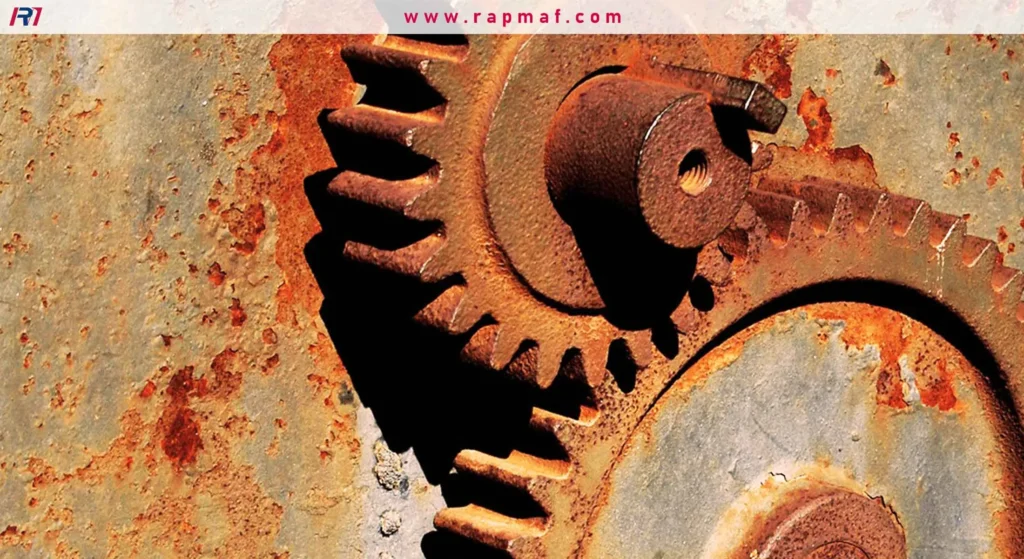
- The Rusting of Iron and Steel (The Obvious One): This is the textbook case. When raw iron or non-stainless steel is exposed to oxygen and moisture, it forms iron oxide. This reddish-brown, flaky substance is structurally weak and will eventually eat away at the entire part. At RM, preventing this is a constant focus, involving everything from climate-controlled storage to protective coatings.
- The Tarnishing of Silver: If you have silver cutlery or jewelry, you’ve seen it turn dark and dull over time. This isn’t dirt; it’s silver sulfide. The silver atoms on the surface react with small amounts of sulfur compounds in the air (often from pollution or certain foods), losing electrons in the process. The silver is oxidized.
- The Green Patina on Copper and Brass: Think of the Statue of Liberty or an old church roof. That beautiful green coating is the result of decades of slow oxidation. Copper reacts with oxygen, water, and atmospheric compounds like carbon dioxide and sulfur dioxide to form a complex layer of copper carbonates, sulfates, and chlorides. While sometimes aesthetically desirable, it is still a form of corrosion.
- The Browning of an Apple: When you slice an apple and leave it out, it quickly turns brown. This is caused by an enzyme called polyphenol oxidase (PPO). When the apple’s cells are broken, the enzyme is exposed to oxygen in the air, rapidly oxidizing phenols in the fruit’s tissue into melanin, which has a brown color.
Useful (or Controlled) Oxidation

- Anodizing Aluminum (Our Specialty): This is where we take oxidation and turn it into a powerful tool. Aluminum naturally forms a very thin, tough, and transparent oxide layer that protects it from further corrosion. Anodizing is an electrochemical process where we precisely control the growth of this oxide layer. We submerge an aluminum part in an acid bath and pass an electric current through it. The part acts as the anode (the positive electrode), and a controlled, rapid oxidation occurs, growing an oxide layer that is thousands of times thicker and more durable than the natural one. It’s porous, so we can even dye it different colors before sealing it. This is how we create parts that are scratch-resistant, corrosion-proof, and beautifully colored.
- Combustion (Rapid Oxidation): A fire, a car engine, a gas stove—these are all examples of extremely fast oxidation. The fuel (wood, gasoline, natural gas) reacts with oxygen so quickly that it releases a massive amount of energy in the form of heat and light. It’s the same fundamental process as rust, just happening in seconds instead of years.
- Human Metabolism: You are oxidizing right now to stay alive. The process of cellular respiration is essentially a slow, controlled “burning” of glucose (sugar) from the food you eat. Your body’s cells systematically break down glucose molecules, transferring their electrons through a series of steps to oxygen you breathe in. This redox reaction releases the energy that powers every single thing you do.
- Disinfecting with Bleach: Chlorine bleach is a powerful oxidizing agent. When it comes into contact with bacteria or viruses, it rips electrons from their cell membranes and essential proteins. This massive disruption (oxidation) destroys the pathogen, rendering it harmless. The same process breaks down the chemical bonds of chromophores (the parts of molecules that cause color), which is why bleach is so effective at removing stains.
Electrochemical Oxidation
- How a Battery Works: A battery is a self-contained redox reaction. In a simple alkaline battery, the anode (usually zinc) is designed to readily give up its electrons (it gets oxidized). These electrons are forced to travel through an external circuit—powering your flashlight or remote control—to reach the cathode (usually manganese dioxide), which eagerly accepts the electrons (it gets reduced). The flow of electrons is the electric current.
- Electroplating: In processes like chrome plating, we use oxidation and reduction to apply a thin metal coating to a part. The part to be plated is the cathode. The metal we want to plate with (e.g., chromium) is the anode. When we pass a current through a special electrolyte solution, the chromium anode oxidizes, losing electrons and dissolving into the solution as positive ions. These positive ions are then attracted to the negatively charged part (the cathode), where they gain electrons (are reduced) and plate onto the surface as a solid, uniform metal layer.
Case Study: The Marine Hardware Failure (A Lesson in Redox)
A few years ago, a new client came to us with an urgent problem. They manufactured high-end boat accessories and had just switched suppliers for a specific stainless steel cleat. After only a few weeks in a saltwater environment, the new cleats were showing small, ugly rust spots and pitting. Their brand reputation was on the line.
The Investigation:
The client was adamant they had specified “300-series stainless steel.” The previous supplier had used 304 stainless steel, which is often fine for freshwater applications. The new supplier, trying to be more competitive on price, had likely used a similar grade. But saltwater is a different beast entirely. It’s full of chloride ions, which are extremely aggressive and love to attack the protective layer of stainless steel.
The Science of the Failure:
All stainless steels are “stainless” because of chromium. The chromium in the alloy reacts with oxygen in the air to form a very thin, invisible, and tough layer of chromium oxide on the surface. This is called a passive layer. It’s a form of controlled oxidation that prevents the more destructive iron oxidation (rust) from occurring.
However, chloride ions in saltwater can penetrate this passive layer at microscopic weak points. Once through, they set up a tiny corrosion cell, rapidly oxidizing the iron underneath. This creates the “pitting” they were seeing.
The RM Solution and the Role of Molybdenum:
We immediately knew the problem. For any marine application, you need 316 or 316L stainless steel. The critical difference is the addition of a small amount of an element called molybdenum. Molybdenum dramatically strengthens the passive chromium oxide layer, making it far more resistant to attack from chlorides.
- 304 Stainless Steel: Oxidized by chlorides.
- 316 Stainless Steel: Resists oxidation by chlorides.
We ran a material analysis on their failed part and confirmed it had no molybdenum. We then manufactured a new batch of cleats for them using certified 316L stainless steel. The problem disappeared completely.
The Lesson: This was a classic redox failure. The client and their previous supplier didn’t fully respect the power of the oxidizing agents in the final service environment. Understanding that “oxidation” isn’t a single thing, but a process that varies wildly with the environment, is the difference between a part that lasts a lifetime and one that fails in a month. It’s a lesson that saved our client’s reputation and one we apply to every project we undertake.
The Actors in the Play: Understanding Oxidizing and Reducing Agents
So far, we’ve focused on the processes of oxidation and reduction. But in any chemical reaction, there have to be actors that make it happen. These are the oxidizing agents and reducing agents. This concept can be a bit counterintuitive at first, but it’s simple once you get the logic.
Think of it like this: a “travel agent” doesn’t travel; they cause someone else to travel. It’s the same in chemistry:
- An Oxidizing Agent is a substance that causes something else to be oxidized. To do this, it must accept electrons. And what do we call a substance that gains electrons? Reduced. Therefore, the oxidizing agent is the substance that gets reduced.
- A Reducing Agent is a substance that causes something else to be reduced. To do this, it must donate electrons. And what do we call a substance that loses electrons? Oxidized. Therefore, the reducing agent is the substance that gets oxidized.
Let’s look back at the rusting of iron:
4Fe + 3O₂ → 2Fe₂O₃
- Iron (Fe) loses electrons (is oxidized), so it is the reducing agent.
- **Oxygen (O₂) **gains electrons (is reduced), so it is the oxidizing agent.
It’s a dance. You can’t have one without the other. Here are some of the most common agents we encounter in the world and in our shop.
Common Oxidizing Agents (The Electron Takers)
- Oxygen (O₂): The most famous of all. It’s highly electronegative, meaning it has a strong pull for electrons, which is why it’s involved in everything from rust to fire to our own metabolism.
- Halogens (Chlorine, Fluorine, Bromine): These are extremely powerful oxidizing agents. Chlorine in bleach works by aggressively oxidizing stains and pathogens. This is also why chlorides in saltwater are so corrosive—they are excellent at stripping electrons from metals.
- Hydrogen Peroxide (H₂O₂): Used as an antiseptic, its power comes from its ability to oxidize and destroy cell walls of bacteria.
- Nitric Acid (HNO₃) and Sulfuric Acid (H₂SO₃): These strong acids are potent oxidizing agents used in many industrial processes, including etching metals and manufacturing fertilizers and explosives.
Common Reducing Agents (The Electron Donors)
- Active Metals (Lithium, Sodium, Magnesium, Aluminum, Zinc, Iron): These metals sit on the left side of the periodic table and are “eager” to give up their electrons. This is why they are so often used as the anode (the negative terminal) in batteries—they are designed to be oxidized (act as a reducing agent). In our industry, we use zinc as a “sacrificial anode” in a process called galvanizing. We coat steel with a layer of zinc. When exposed to a corrosive environment, the more active zinc corrodes (oxidizes) first, sacrificing itself to protect the steel underneath.
- Carbon (C) and Carbon Monoxide (CO): Carbon is a fantastic reducing agent at high temperatures. This is the entire basis of a blast furnace. Iron ore (iron oxide) is heated with coke (a form of carbon). The carbon strips the oxygen atoms from the iron, reducing the iron oxide back to pure, molten iron.
- Hydrogen (H₂): A clean and effective reducing agent used in many processes, including food production (hydrogenating oils to make margarine) and in the chemical industry.
Understanding these agents is critical for an engineer. When we select a material, we’re not just choosing a metal; we’re choosing a reducing agent and placing it into an environment full of potential oxidizing agents. Our job is to predict and control the outcome of that inevitable interaction.
Conclusion: Why Oxidation is the Most Important Process You Can’t Ignore
We started with a simple question: “What is oxidation?” By now, I hope you see that the answer is far more profound than just “rust.”
Oxidation is the fundamental currency of chemical energy transfer in our universe. It is the loss of electrons. This single process is responsible for the energy that powers our bodies, the light from a flame, the electricity from a battery, and the slow, inevitable decay of unprotected metals.
As engineers and manufacturers at RM, understanding oxidation isn’t an academic exercise; it is the core of material science and the foundation of quality.
- It forces us to respect the environment. The failure of the 304 stainless steel cleat in our case study was a failure to respect the oxidizing power of saltwater.
- It allows us to create superior products. By controlling oxidation, we perform the magic of anodizing, turning a weakness into a source of immense strength, durability, and beauty.
- It dictates our process controls. From the atmosphere in our heat-treating furnaces to the protective coatings we apply, every step is a calculated battle against uncontrolled oxidation.
So, while “oxidization” is just another word for it, “oxidation” itself is a force to be harnessed, respected, and understood. Ignoring it leads to failure. Mastering it leads to innovation and durability. That is the philosophy we build into every single part that leaves our facility.
Frequently Asked Questions (FAQ)
Q1: What is the difference between oxidation and oxidization?
There is no scientific difference between “oxidation” and “oxidization.” They mean the exact same thing: the chemical process involving the loss of electrons. “Oxidation” is the overwhelmingly preferred and standard term in all scientific, technical, and engineering contexts. “Oxidization” is a valid but far less common variant, sometimes seen in older texts or used as a stylistic choice. For clarity and professionalism, always use “oxidation.”
Q2: What is oxidation and reduction in simple terms?
The simplest way to remember it is with the mnemonic OIL RIG:
- Oxidation Is Loss (of electrons).
- Reduction Is Gain (of electrons).
Think of it like a transaction. One atom “gives away” or loses electrons (oxidation), and another atom must “accept” or gain those same electrons (reduction). They always happen together. You can’t have one without the other. Rusting is a perfect example: the iron atom loses electrons (oxidation) and the oxygen atom gains them (reduction).
Q3: What is the definition of oxidation?
There are three common definitions that build on each other:
- The Classical Definition: The gain of oxygen atoms. (e.g., Iron + Oxygen → Iron Oxide).
- The Broader Definition: The loss of hydrogen atoms. (Common in organic chemistry).
- The Modern, Most Accurate Definition: The loss of one or more electrons, resulting in an increase in the oxidation state of an atom, ion, or molecule. This is the definition all scientists and engineers use because it covers every possible scenario, even those not involving oxygen.
Q4: Is rust different from oxidation?
Rust is a specific example of oxidation. “Oxidation” is the name of the broad chemical process (electron loss). “Rust” is the common name for the specific result of that process when it happens to iron or steel—the formation of iron oxides. So, all rust is the result of oxidation, but not all oxidation results in rust (e.g., a browning apple or a tarnished silver spoon are also examples of oxidation).
References
- Chemistry LibreTexts (UC Davis): Oxidation-Reduction Reactions. An in-depth university-level resource covering the core principles of redox chemistry.
- American Chemical Society (ACS): Iron and Rust. A clear explanation of the specific chemical reactions involved in the rusting process, from the world’s largest scientific society.
- Purdue University, Department of Chemistry: Oxidizing and Reducing Agents. A concise guide explaining the roles of different agents in redox reactions, with clear examples.
Disclaimer
The information on this page is for informational purposes only. RM makes no representations or warranties, express or implied, as to the accuracy or completeness of this information. For any third-party services procured through the RM network, it is the buyer’s responsibility to specify and confirm performance parameters, tolerances, materials, and workmanship during the quotation process. For more detailed information, please do not hesitate to contact us.
RM: Your Precision Manufacturing Partner
RM is an industry leader in custom manufacturing solutions. With over 20 years of profound experience, we have become the trusted partner for more than 5,000 clients worldwide. We specialize in a comprehensive range of manufacturing services—including high-precision CNC machining, sheet metal fabrication, 3D printing, injection molding, and metal stamping—to provide you with a true one-stop-shop experience.
Our world-class facility is equipped with over 100 state-of-the-art 5-axis machining centers and operates in strict compliance with the ISO 9001:2015 quality management system. We are dedicated to providing solutions that blend speed, efficiency, and exceptional quality to customers in over 150 countries. From rapid prototyping to large-scale production, we promise delivery in as fast as 24 hours, helping you gain a competitive edge in the market. Choosing RM means selecting an efficient, reliable, and professional manufacturing ally.
Explore our capabilities today by visiting our website: www.rapmaf.com







2 Responses