



If you’ve heard whispers about a 3D printing technology that can create tough, functional parts without any support structures, you’ve likely stumbled upon Selective Laser Sintering, or SLS. But let’s cut through the jargon. As an engineer who has managed professional SLS systems for years, I can tell you this: SLS is the workhorse of industrial polymer 3D printing.
It’s not for printing desktop toys or colorful figurines. It’s the technology we turn to when we need to create complex, durable, and functional components—from snap-fit enclosures and living hinges to custom jigs and fixtures that can withstand the rigors of a factory floor.
In this guide, I’m not going to just give you the textbook definition. I’m going to take you onto the shop floor, open the door to our SLS machine, and show you exactly how it works, what it’s truly capable of, and—most importantly—when it’s the right choice for your project.
Meet Your Guide: Why Trust This Information?
My name is Clive, and I’m a lead manufacturing engineer here at RM (Rapid Manufacturing). My job revolves around turning digital designs into physical parts. I don’t just read about technologies like SLS; I operate them, maintain them, and push them to their limits every day. We rely on our in-house SLS machines to produce everything from one-off functional prototypes for aerospace clients to small-batch production runs for medical device companies.
This guide is built on that direct, hands-on experience. It’s filled with the kind of practical insights you only get from cleaning out a build chamber full of hot polymer powder or diagnosing why a specific geometry is warping. At RM, we believe that an informed client is our best partner. By understanding the core principles of a technology like SLS, you can design better parts and make smarter manufacturing decisions.
The Core Principle: What Does “Selective Laser Sintering” Actually Mean?
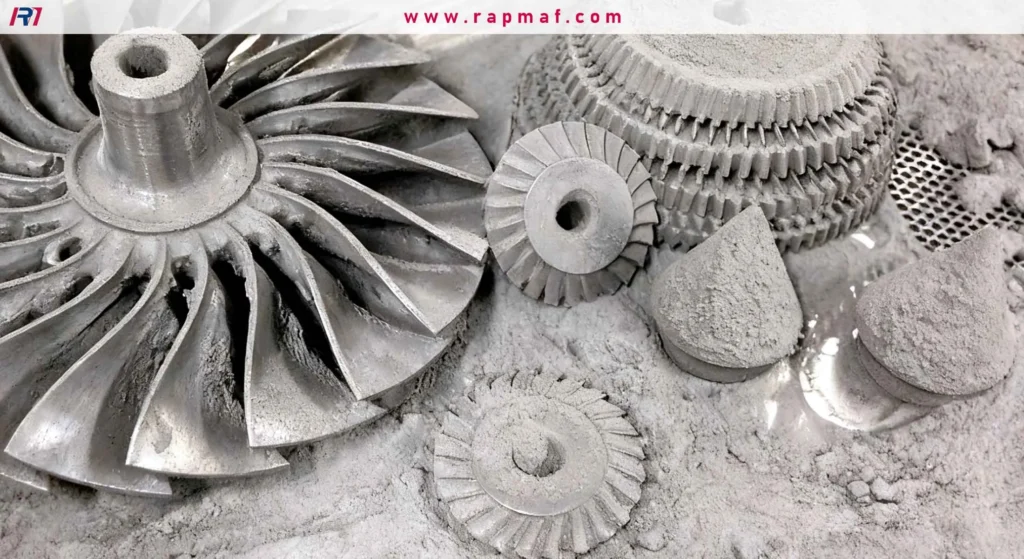
The name itself is a perfect, step-by-step description of the process. Let’s break it down:
- Selective: This is the key to all 3D printing. We aren’t cutting material away from a block (like CNC machining). Instead, we are selectively adding material only where we want it, layer by microscopic layer.
- Laser: The “pen” that draws our part is a high-powered, precision-guided CO₂ laser. This isn’t a laser pointer; it’s an industrial tool capable of generating intense, localized heat.
- Sintering: This is the magic word. Sintering is the process of using heat to fuse particles of a material together without fully melting them. Imagine having a tray of fine sugar and using a magnifying glass to melt just the surface of the sugar particles so they stick together to form a solid shape. That’s the essence of sintering. The laser heats the polymer powder just enough for the edges of the tiny spheres to fuse, creating a solid mass.
The “Bed of Powder” Analogy:
The easiest way to visualize the SLS process is to imagine a sandbox filled to the brim with fine, black powder. Now, imagine you have a powerful, computer-controlled laser pointer suspended above it. The computer directs the laser to draw the first slice of your 3D model onto the surface of the powder. Everywhere the laser touches, the powder particles fuse together into a solid layer.
Then, a roller pushes a fresh, paper-thin layer of powder over the entire sandbox, covering your first solidified layer. The laser then draws the second slice of your model, fusing it to the layer below. This process repeats—draw, coat, draw, coat—hundreds or thousands of time until your final, three-dimensional part is fully formed and buried within the loose, unfused powder.
Is SLS for Metal or Plastic? A Critical Clarification
This is one of the most common points of confusion in the additive manufacturing world.
Traditionally and most commonly, SLS is a polymer (plastic) process. The workhorse material for SLS, and the one we use for over 90% of our jobs, is Nylon, specifically PA 12 (Polyamide 12). Other engineering polymers like PA 11, glass-filled Nylons, or TPU (a flexible, rubber-like material) are also used.
So, when engineers like me talk about “SLS,” we are almost always referring to printing in these durable, engineering-grade plastics.
What About Metal?
There are related technologies that do print in metal using a similar powder-bed fusion method. These are called:
- Direct Metal Laser Sintering (DMLS): This process sinters metal powders.
- Selective Laser Melting (SLM): This process uses a more powerful laser to fully melt the metal powders.
While they operate on a similar principle, they are far more complex and expensive technologies requiring different machines, controlled atmospheres, and extensive post-processing. For the purpose of this guide, when we say SLS, we are focusing on the polymer process that is transforming how we design and manufacture plastic parts.
| Technology | Primary Materials | Fusing Method | Key Characteristic |
|---|---|---|---|
| SLS (Selective Laser Sintering) | Nylon (PA 12, PA 11), TPU, Polymer Composites | Sintering (fusing particle edges) | The industrial standard for strong, functional plastic parts. |
| DMLS (Direct Metal Laser Sintering) | Aluminum, Stainless Steel, Titanium | Sintering (high-temp fusion) | Creates strong, functional metal parts. |
| SLM (Selective Laser Melting) | Titanium, Cobalt Chrome, Inconel | Full Melting | Creates fully dense metal parts, often for high-performance aerospace applications. |
The 7-Step SLS Process: From Digital File to Physical Part
To truly understand SLS, you need to visualize the entire workflow, from a file on a computer to a physical part in your hand. This isn’t an instant process; it’s a carefully controlled industrial procedure. Let’s walk through the exact steps we take here at RM when a client sends us a part for SLS printing.
Step 1: CAD Preparation & Nesting
It all starts with your 3D CAD (Computer-Aided Design) model. You or your designer create the part in a program like SolidWorks, Fusion 360, or CATIA. For us to print it, you’ll export that file as an STL or STEP file.
Our engineers then take your file and load it into our machine’s specialized “nesting” software. This is a critical, value-adding step. Because SLS parts are self-supporting (more on that later), we can “pack” or “nest” dozens, or even hundreds, of different parts into a single build volume. We arrange them in 3D space like a complex puzzle to maximize the number of parts we can print in one go. This “packing density” is key to making SLS cost-effective for small production runs. A well-packed build is far cheaper per part than a sparsely packed one.
Step 2: Machine Setup & Pre-Heating
Once the build file is ready, we prepare the machine itself. This involves filling the machine with the chosen polymer powder (e.g., Nylon PA 12) and cleaning the build area to ensure no contaminants are present.
Then comes the most important, and often overlooked, part of the setup: pre-heating. The entire build chamber, including the powder bed and the surrounding volume, is slowly heated to a temperature just below the powder’s sintering point. For PA 12, this is typically around 170-180°C. This step is non-negotiable and can take several hours. Pre-heating the powder prevents thermal shock and warping when the laser introduces intense, localized heat, ensuring dimensional accuracy and part stability.
Step 3: The Printing (Sintering) Begins
With the chamber at the optimal temperature, the magic happens.
- A recoating roller or blade sweeps a very thin layer of powder (typically 100-120 microns, or about the thickness of a human hair) from a powder reservoir across the build platform.
- The high-powered CO₂ laser, guided by a set of dynamic mirrors (galvanometers), rapidly scans the surface of the powder, tracing the cross-section of the nested parts.
- Everywhere the laser touches, the powder is heated to its sintering point, and the particles fuse together, creating a solid layer.
- The build platform lowers by the height of a single layer.
- The recoater sweeps a fresh layer of powder across the platform, and the process repeats.
This cycle continues, layer by layer, for the entire duration of the build, which can be anywhere from 12 hours to 48 hours or more, depending on the height of the nested parts.
Step 4: Cooling (The Critical Wait)
Once the final layer is sintered, the job is far from over. The machine’s heaters are turned off, but the build chamber remains sealed. Inside is a massive, solid block of hot powder (we call it the “powder cake”) with the finished parts suspended within.
This block must cool down slowly and uniformly inside the machine. This is arguably as critical as the printing itself. If we were to open the door and expose the hot parts to cool room air, they would warp and distort dramatically. The controlled cool-down period, which can take another 12 to 24 hours, allows the internal stresses in the parts to relax gradually, ensuring they are dimensionally stable and accurate to the original CAD file.
Step 5: Breakout & Powder Recovery (“The Excavation”)
After the cool-down is complete, we can finally access the parts. The entire powder cake is moved from the printer to a breakout station. This part of the process feels like an archaeological dig.
We carefully use brushes and compressed air to break apart the loose, unsintered powder, revealing the solid, white parts within. The unsintered powder acts as the support structure during the build, which is why SLS can create incredibly complex geometries, internal channels, and moving parts all in one piece without the need for traditional, break-away supports.
The recovered loose powder isn’t wasted. It is collected, sieved to remove any clumps, and then mixed with a certain percentage of fresh, virgin powder for the next build. This powder “refresh rate” is a key factor in ensuring consistent material properties from build to build.
Step 6: Media Blasting & Cleaning
The raw parts pulled from the breakout station have a slightly rough, sandpaper-like surface texture from the powder particles that are lightly stuck to the surface. To get a clean, professional finish, every part goes through a media blasting process.
We use a blasting cabinet to shoot fine beads of glass or plastic at the part’s surface. This gently and uniformly removes any residual powder, leaving a smooth, matte, professional finish.
Step 7: Optional Finishing & Quality Control
For many functional parts, media blasting is the final step. However, if a different color is required, the porous nature of SLS parts makes them perfect for dyeing. We can submerge the parts in a hot dye bath to give them a deep, rich color (most commonly black).
Finally, every part goes to our Quality Control department. We use calipers, gauges, and sometimes CMM scanners to inspect critical dimensions and ensure the parts meet the client’s specifications before they are packaged and shipped.
| Stage | Key Action | Clive’s Engineering Insight |
|---|---|---|
| 1. Preparation | CAD file nesting. | Maximizing part density in the build volume is the #1 way to reduce the cost per part. |
| 2. Setup | Machine pre-heating. | Skipping or rushing the pre-heat is the fastest way to create a warped, useless build. Patience is critical. |
| 3. Printing | Layer-by-layer laser sintering. | The laser isn’t melting, it’s just fusing the particle edges. This creates the characteristic strong but slightly porous structure. |
| 4. Cooling | Slow, controlled cool-down in the machine. | This is where dimensional accuracy is locked in. Rushing this step will ruin the entire build. |
| 5. Breakout | Excavating parts from the powder cake. | The loose powder is the “support,” enabling designs impossible with other methods. |
| 6. Cleaning | Media blasting the part surface. | This step transforms the part from a rough print to a professionally finished component. |
| 7. Finishing | Optional dyeing, and final QC. | The natural porosity of SLS Nylon makes it ideal for post-process dyeing to achieve a finished look. |
Real-World Applications & Case Study
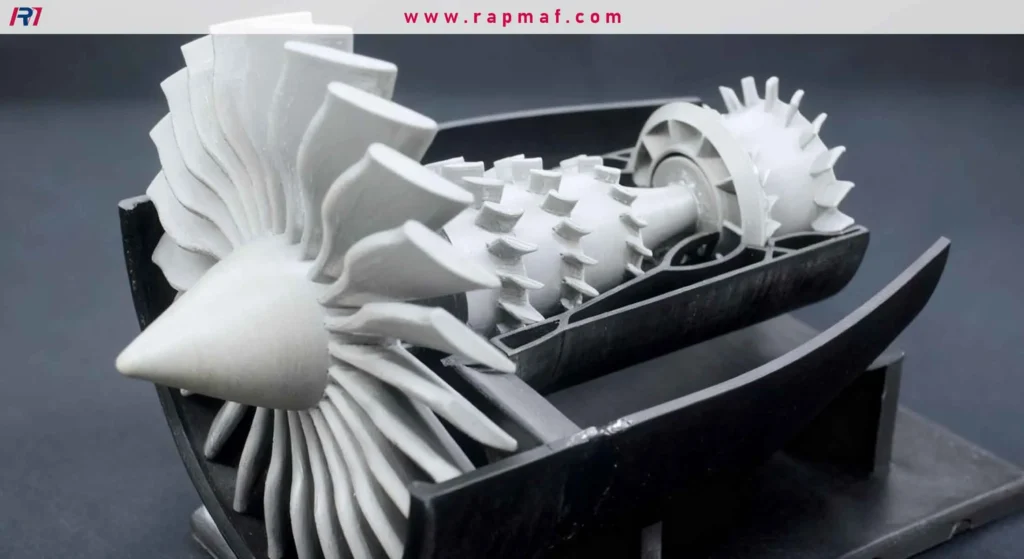
The true power of SLS lies in its ability to create strong, functional parts with a level of design freedom that is difficult or impossible to achieve with traditional manufacturing.
Typical Uses for SLS:
- Functional Prototyping: Creating prototypes that can be snap-fitted, hinge-tested, and physically abused just like a final injection-molded part.
- Complex Geometries: Parts with intricate internal channels for airflow or fluid flow, lattices, or other “un-moldable” features.
- Low-Volume Production: Creating end-use parts in quantities from 10 to 1,000 where the cost of injection mold tooling would be prohibitive.
- Custom Jigs, Fixtures, and Tooling: Designing custom, lightweight tools for our own assembly lines to improve efficiency and ergonomics.
- Medical Devices: Creating biocompatible prototypes and end-use parts like custom surgical guides.
Case Study: The Drone Enclosure Challenge
- The Client: An aerospace startup developing a high-performance surveillance drone.
- The Problem: They needed a custom enclosure for their flight controller and sensor array. It had to be lightweight, strong enough to survive hard landings, and feature complex internal geometry with snap-fits, connector cutouts, and integrated cooling vents. Injection molding was too expensive for their prototyping phase (tooling quoted at $15,000), and parts made on their desktop FDM and SLA printers were too brittle and would shatter on impact.
- The RM Solution: We proposed using our in-house SLS machine with PA 12 Nylon.
- Strength & Durability: The PA 12 material has excellent impact resistance and a slight flex, allowing it to absorb landing shocks without cracking.
- Design Freedom: The self-supporting nature of SLS meant we could print their complex design with its internal walls and honeycomb-patterned vents perfectly, with no need for design compromises. The snap-fits were strong and could be used hundreds of times without breaking.
- Speed & Iteration: We were able to print their first design iteration within 48 hours. They tested it, found a few areas for improvement, sent us a revised CAD file, and we printed the new version in the next build. They went through three design iterations in just over a week.
- The Outcome: The client finalized their design in record time, having tested real, functional parts at each stage. They then used us to produce an initial batch of 50 enclosures for their first production run, bridging the gap before they committed to high-volume injection molding. SLS saved them thousands in tooling costs and shaved weeks off their development timeline.
The Engineer’s Verdict: SLS Advantages and Disadvantages
No manufacturing process is perfect for every application. The key to being a good engineer is knowing the specific strengths and weaknesses of every tool in your toolbox. Here’s my honest, real-world breakdown of when to use SLS—and when to choose something else.
The Unbeatable Advantages of SLS
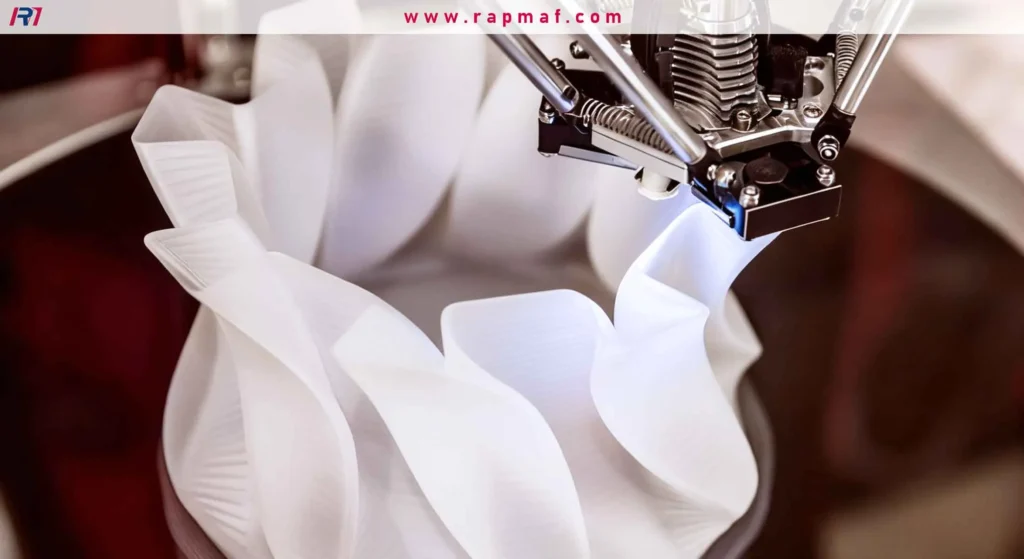
- Supreme Design Freedom (No Supports Needed): This is the number one reason to choose SLS. The fact that the unsintered powder supports the part during the build is a game-changer. It means you can design and print:
- Interlocking and moving parts printed as a single assembly.
- Complex internal channels for air or liquid flow.
- “Impossible” geometries with features that could never be molded or machined.
- Overhangs and undercuts without worrying about support structures that need to be manually removed, which can damage the part surface.
- Excellent Mechanical Properties & Durability: SLS parts, particularly those made from PA 12 Nylon, are tough. They behave much like conventional injection-molded thermoplastics. They possess good tensile strength, high impact resistance, and a degree of flexibility that makes them incredibly durable. This is why we use them for functional prototypes and end-use parts, not just visual models. They can be dropped, snapped, and stressed without failing.
- Cost-Effective for Low-to-Mid Volume Production: The ability to nest hundreds of parts in a single build makes SLS highly economical for production runs from 10 to a few thousand units. You bypass the enormous upfront cost of injection mold tooling (which can range from $5,000 to $50,000+). This “bridge manufacturing” capability is perfect for product launches, custom parts, or industries where designs change frequently.
- Good Accuracy and Repeatability: While not as precise as CNC machining, industrial SLS systems offer excellent dimensional accuracy (typically within ±0.3 mm) and high repeatability from build to build. This makes them reliable for producing interchangeable parts with functional features like snap-fits and press-fits.
The Practical Disadvantages & Limitations of SLS
- Slightly Porous & Rough Surface Finish: The sintering process fuses particles together, which inherently leaves microscopic voids between them. This results in a part that is slightly porous (around 70-95% dense compared to a solid molded part) and has a grainy, matte surface finish, similar to a sugar cube or fine-grit sandpaper. While great for dyeing, it’s not suitable for applications requiring optical clarity or a perfectly smooth, glossy finish without significant post-processing (like vapor smoothing).
- Longer Lead Times (Due to Cooling): The process isn’t just about print time. The mandatory, extended cool-down period means the entire cycle for a single build can easily take 2-3 days. This is slower than technologies like SLA or FDM for a single part, although the ability to nest many parts often compensates for this in batch production.
- Limited Material Selection (Primarily Nylon): While new materials are always being developed, the SLS world is dominated by Nylon (PA 11, PA 12) and its variants (glass-filled, carbon-filled). The material palette is far smaller than that of FDM or even injection molding. If your application requires a specific material like ABS, Polycarbonate, or a clear acrylic, SLS is not the right choice.
- Higher Cost for Single, Large Parts: The economics of SLS thrive on packing density. If you are only printing one single, large part that takes up the entire build volume, the cost can be significantly higher than other methods like FDM or CNC machining because you aren’t amortizing the machine’s run time across many parts.
SLS vs. SLA: Which Technology is Right for You?
One of the most common questions I get from clients is, “Should I use SLS or SLA?” SLA (Stereolithography) is another popular 3D printing technology that uses a UV laser to cure a liquid photopolymer resin. They are fundamentally different tools for different jobs.
Here’s how they stack up:
| Feature | SLS (Selective Laser Sintering) | SLA (Stereolithography) | Clive’s Verdict |
|---|---|---|---|
| Material Type | Thermoplastic Powders (Nylon) | Photopolymer Resins (Acrylic-based) | SLS parts are tough engineering plastics. SLA parts are more brittle and better for visual models. |
| Mechanical Properties | High strength, High impact resistance, Good flexibility. | Low strength, Brittle (low impact resistance), Rigid. | For parts that need to bend, snap, or survive a drop, SLS is the clear winner. |
| Surface Finish | Rough, grainy, matte. | Very Smooth, can be polished to be optically clear. | For beautiful, high-detail visual prototypes or masters for casting, SLA is superior. |
| Accuracy & Detail | Good accuracy (±0.3 mm), moderate detail. | Excellent accuracy (±0.1 mm), Very high feature detail. | For tiny, intricate features like jewelry or miniature models, SLA has the edge. |
| Support Structures | None (self-supporting in powder). | Required, must be manually removed, leaving small marks. | For complex geometries and internal channels, SLS is unbeatable. |
| Ideal Application | Functional prototypes, complex parts, low-volume production. | Visual models, form/fit prototypes, patterns for casting. | Choose the tool that matches the part’s primary function: Durability (SLS) vs. Aesthetics (SLA). |
Conclusion: SLS as the Bridge Between Prototyping and Production
So, what is Selective Laser Sintering?
It’s not just another 3D printing technology. It’s a transformative manufacturing tool that has fundamentally changed the way we develop and produce complex plastic parts. It provides an unparalleled combination of design freedom and real-world material durability.
By eliminating the need for support structures, SLS empowers engineers to design parts based on function, not on the limitations of the manufacturing process. And by using robust materials like Nylon, it creates parts that are strong enough to serve not just as models, but as functional, end-use components.
It is the technology that builds the bridge between a single, fragile prototype and a full-scale, multi-thousand-dollar injection molding tool. Whether you are an innovator testing a new mechanism, a startup launching its first batch of 100 products, or a factory needing a custom jig tomorrow, SLS provides a powerful, fast, and cost-effective solution.
If your project demands tough, complex plastic parts and you need them now, there’s a very good chance that the answer lies in that heated bed of polymer powder.
Frequently Asked Questions (FAQ)
Q1: What is the selective laser sintering process?
The SLS process uses a high-powered laser to selectively fuse (sinter) particles of polymer powder, layer by layer, to build a 3D object. The key feature is that the unfused powder in the build chamber acts as a natural support structure, allowing for highly complex geometries to be created without additional supports.
Q2: What is the principle of SLS?
The core principle is “powder bed fusion.” A bed of powdered material is heated to just below its melting point. A laser then traces the cross-section of the part, providing the small amount of extra energy needed to fuse the powder particles together into a solid layer. This is repeated until the full 3D part is formed within the powder bed.
Q3: Is SLS metal or plastic?
While related technologies like DMLS and SLM are used for metals, the term SLS is overwhelmingly used to refer to the process for plastics (polymers). The most common material by far is Nylon (PA 12). So, for all practical purposes, think of SLS as a plastic 3D printing technology.
Q4: What are typical uses for SLS?
Typical uses include:
- Functional prototypes that require high durability and strength.
- Low-volume production runs of end-use parts (10-1000 units).
- Complex designs that are impossible to injection mold, such as parts with internal channels or interlocking features.
- Custom jigs, fixtures, and tooling for manufacturing and assembly lines.
References
- ASTM F2771-18 – Standard Terminology for Additive Manufacturing: Published by ASTM International, this standard provides the official definitions and terminology for all AM processes, including powder bed fusion technologies like SLS. It’s the foundational document for ensuring engineers and manufacturers are speaking the same language.
- Wohlers Report (Annual Global Report on Additive Manufacturing): This is the undisputed “bible” of the 3D printing industry. It provides comprehensive data on the growth, trends, materials, and applications of technologies like SLS, serving as the benchmark for industry analysis and investment.
- “Thermal behavior of polyamide 12 powder in the selective laser sintering process” – Journal of Materials Processing Technology: Academic papers like this one, often from university engineering departments, provide the deep scientific analysis of what actually happens during the sintering process. They study heat transfer, material degradation, and powder recyclability, forming the scientific basis for the best practices we use in our shop.
Disclaimer
The information on this page is for informational purposes only. RM makes no representations or warranties, express or implied, as to the accuracy or completeness of this information. For any third-party services procured through the RM network, it is the buyer’s responsibility to specify and confirm performance parameters, tolerances, materials, and workmanship during the quotation process. For more detailed information, please do not hesitate to contact us.
RM: Your Precision Manufacturing Partner
RM is an industry leader in custom manufacturing solutions. With over 20 years of profound experience, we have become the trusted partner for more than 5,000 clients worldwide. We specialize in a comprehensive range of manufacturing services—including high-precision CNC machining, sheet metal fabrication, 3D printing, injection molding, and metal stamping—to provide you with a true one-stop-shop experience.
Our world-class facility is equipped with over 100 state-of-the-art 5-axis machining centers and operates in strict compliance with the ISO 9001:2015 quality management system. We are dedicated to providing solutions that blend speed, efficiency, and exceptional quality to customers in over 150 countries. From rapid prototyping to large-scale production, we promise delivery in as fast as 24 hours, helping you gain a competitive edge in the market. Choosing RM means selecting an efficient, reliable, and professional manufacturing ally.
Explore our capabilities today by visiting our website: www.rapmaf.com







5 Responses